


































Reviewing The “History” Of Team Yankee – Part Three: A War That Never Was
September 11, 2017 by crew


We’re back, Beasts of War, for another look into the background and context of the Team Yankee wargame. With Battlegroup’s new campaign underway, the moment seemed right for Ben Collins (@benc) and myself to take a fresh look (and challenge some myths) about what a Third World War in 1980s Europe might’ve looked like.
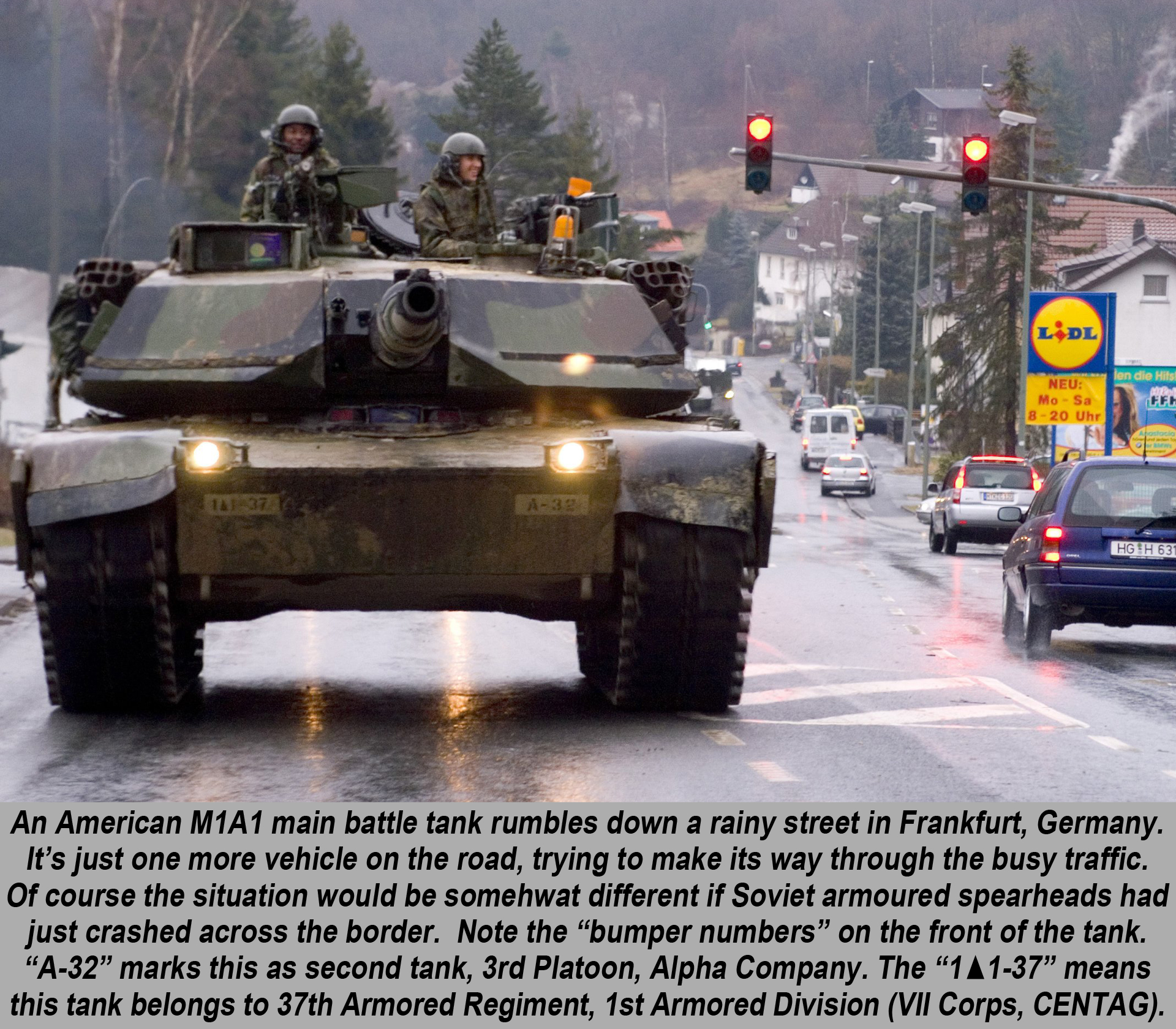
In Part One we introduced the project and reviewed some of the background material on which the Team Yankee Wargame was initially based. In Part Two we looked at NATO and the Warsaw Pact as they actually stood in the mid-80s, reviewing the different national armies, equipment, and high-level organizations deployed in the theatre.
Now it’s time to “start shooting,” and review some theories of how World War III in Europe might have actually ignited and played out. What would “really” happen … and what wouldn’t?
How The War Starts
The Case Against NATO Striking First
During the 2015 Teak Yankee Boot Camp, we had a lot of fun imagining a NATO invasion of “Lloydoslavia” – a hypothetical Eastern European nation of bad window curtains and too many aubergines. Humour aside, however, the question remains ... could NATO have really struck first? Almost certainly not, and here’s why.
When a country joins NATO, they subscribe to the NATO Charter. In particular, Articles IV and V of this charter say (very roughly) that decisions are made by all member states as a whole, and that an attack against any member state is considered an attack against all member states.
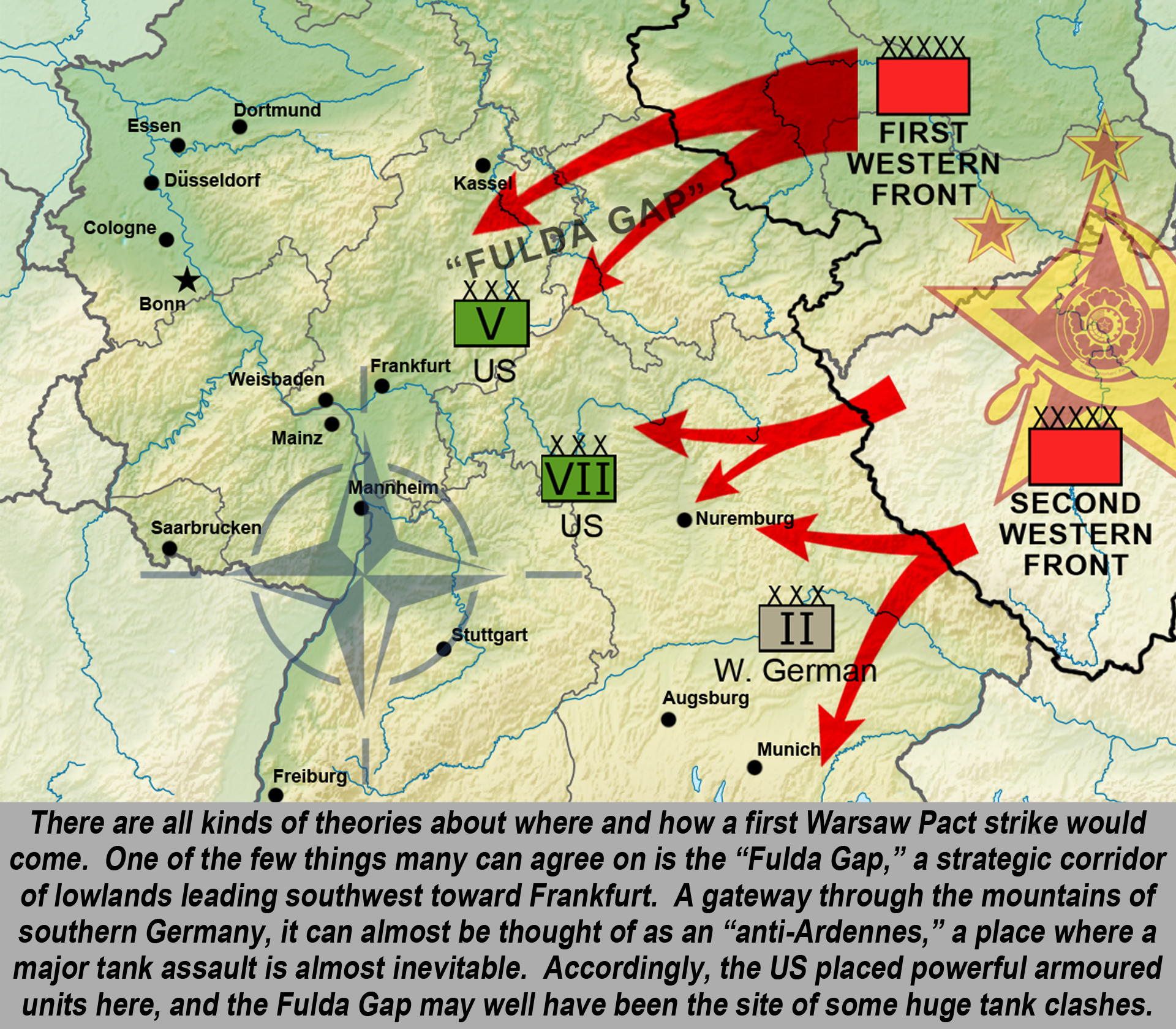
So if NATO wanted to strike first, even pre-emptively against an anticipated Warsaw Pact invasion, all member states would have to agree to it. That means days or weeks of conferences, debates, arguments ... and no possibility of a surprise attack.
Another piece of “circumstantial evidence” is NATO planning. Records clearly show that NATO anticipated giving ground, trading land for time as their forces absorbed the shock of invading spearheads. This certainly never made West Germany happy, but given Warsaw Pact numerical superiority and “first strike” initiative, there was no choice.
So when we say NATO wasn’t going to hit first, we’re not making some kind of moral call or characterizing NATO as the automatic “good guys.” A whole spectrum of diplomatic, political, and military factors simply make a NATO first strike (at least on the ground) a very tough sell.
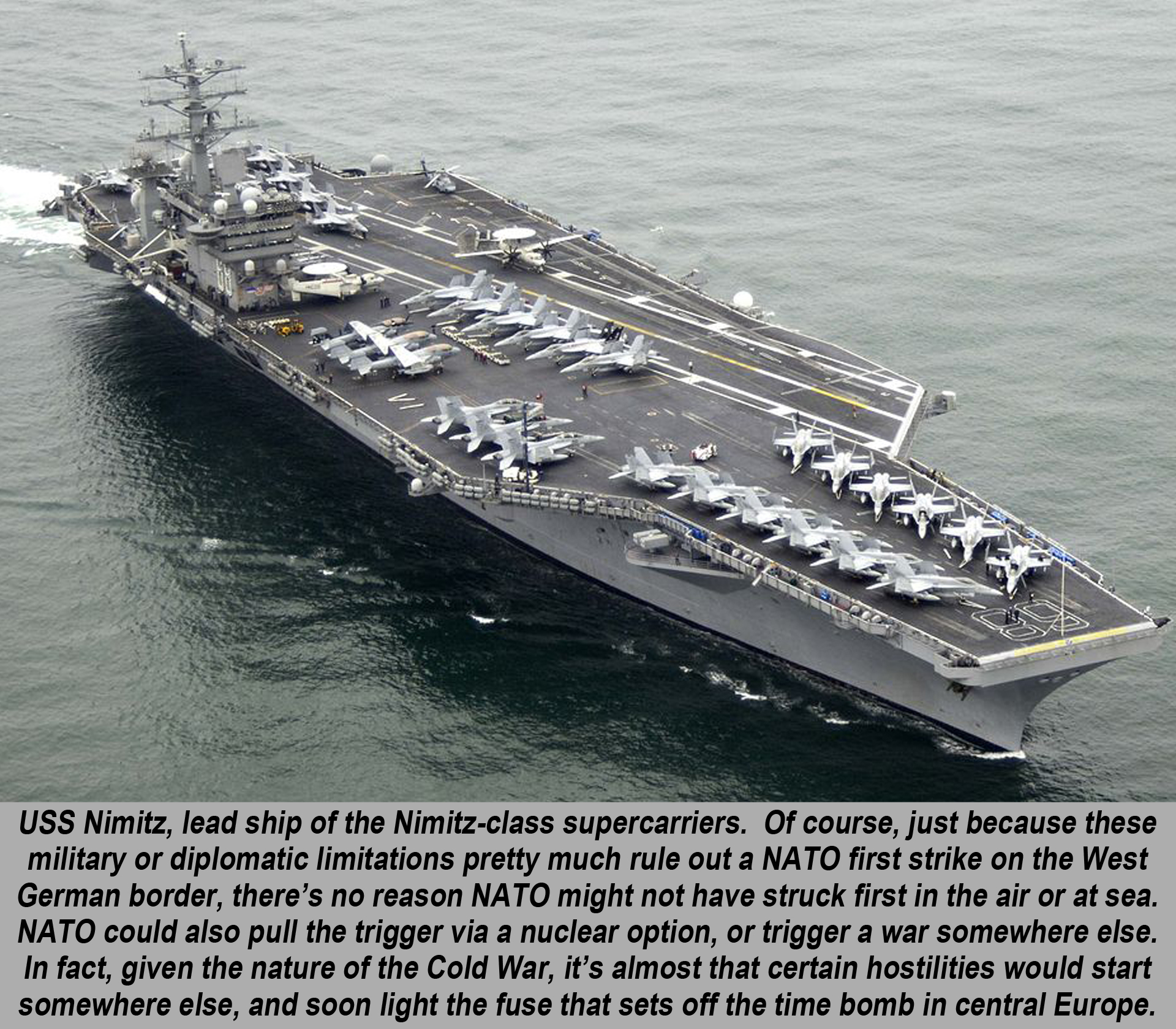
So assuming a Warsaw Pact first strike, how would such a war really start? It seems clear that one of the first theatres of combat wouldn’t be on a battlefield of hills, roads, and buildings, but of wavelengths ... as the Warsaw Pact attempted to establish an early superiority in the arena of electronic warfare.
Electronic Warfare
BenC Surveys The Invisible Battlefield
Electronic Warfare (EW) is the term given to operations in the electromagnetic spectrum (EMS), so think of radar, radio, infra-red, thermal imaging etc. In the context of land operations EW is used as an intelligence tool to build up a picture of what the enemy is doing and more importantly what he is going to do.

EW is also used offensively to attack the enemy command & control (C2) systems. The main target for EW are radio communications. The aim is to disrupt the enemy at a crucial time by jamming. Simply put, jamming is the process of putting more power to a receiver than the intended transmitter.
Jamming can take various forms and can include transmitting static, beeps and tones or music. The jamming doesn’t have to blot out communications entirely, only disrupt them and make the radio operators work twice as hard. To get a feel for how quickly that can get your temper up next time you play Team Yankee have some static playing at full blast from a stereo for the whole duration of the game.
The Soviets were quick to realise that the EMS represented an electronic battleground and they were determined to dominate that ground in any potential conflict with NATO. He who controls the EMS has the advantage, it’s like holding the high ground. EW units were included across the levels of the Soviet force structure and it is something they were very good at.
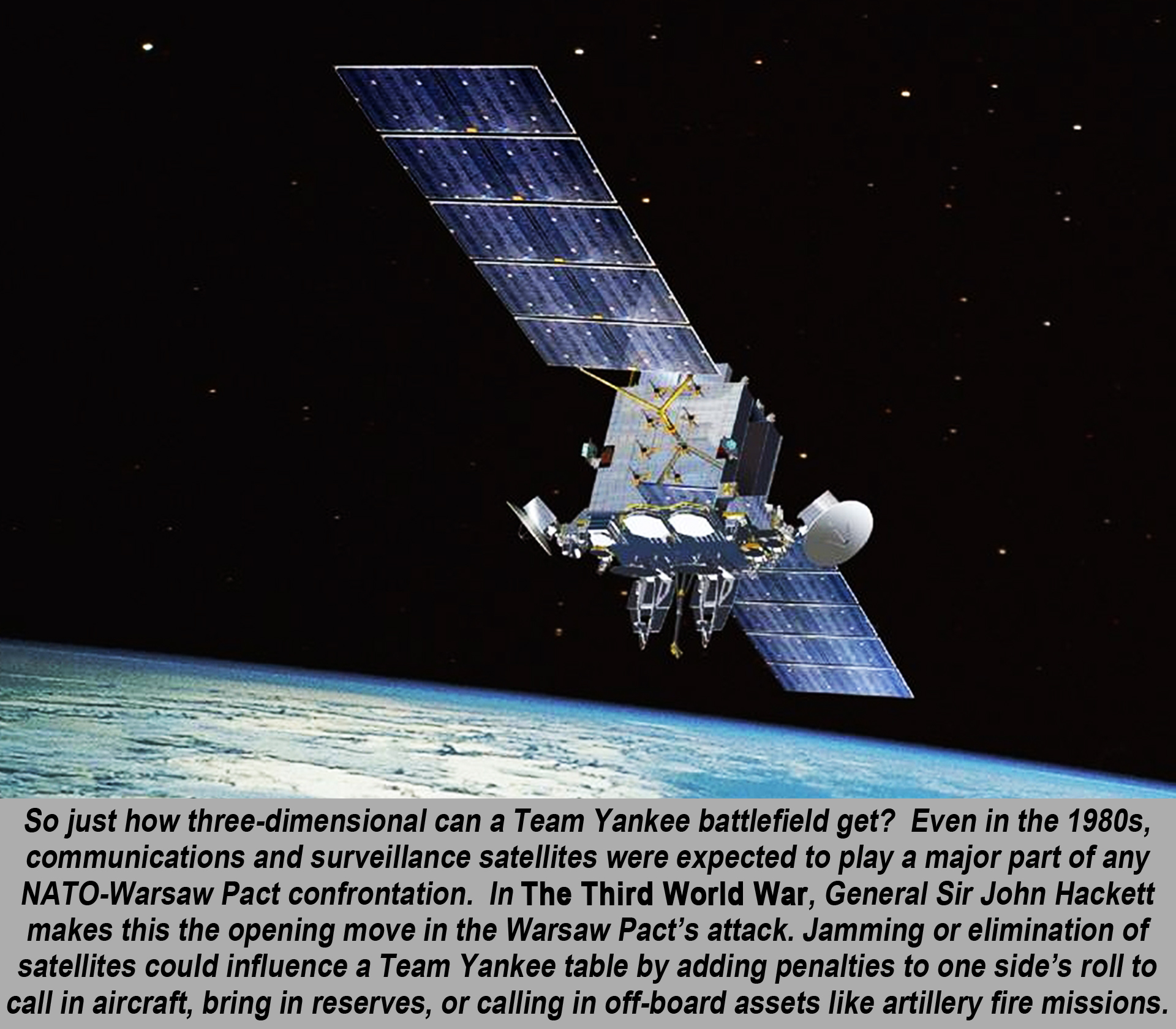
To give some sense of scale EW in the British Army has always been a specialised activity and there is a single EW regiment sized unit that does it. In the 3rd Shock Army, which would have faced the British troops in Germany, there were five EW battalions.
First Strikes
Oriskany’s Report
Look, the last thing I want to do here is run a “campaign battle report” on how this war would have gone. Far better writers than I have literally made their careers doing this. Plus, with the Battlefront “Red Thunder” campaign in full swing, Team Yankee players around the world are making their own campaign as we speak!
That said, there are some summary statements of predictions that can be made that outline in broad strikes the general conditions of an initial Warsaw Pact invasion of West Germany.
First up, NATO would be on the back foot. Soviet numbers cannot be denied, and Soviet capabilities, doctrine, and training were a lot better than many people think. This is especially true for spearhead formations like GSFG – Group of Soviet Forces in Germany). Deep airstrike and airmobile landing operations could also be expected.
The expectation of NATO’s initial difficulties is also evident in NATO planning. Each corps had a designated “covering force area” – a forward zone that would basically be traded for time, bleeding the Soviets while NATO forces fell back. Special forces would be left in pre-staged bunkers, emerging behind the Soviets to attack rear areas.
Also, almost everyone agrees that the biggest Warsaw Pact advances would be made in the north. In places like Bavaria, Thuringia, and Hesse, the West Germans and Americans of CENTAG (Central Army Group) would hold much better due to huge deployments of expensive, high-tech US firepower and much more difficult terrain.
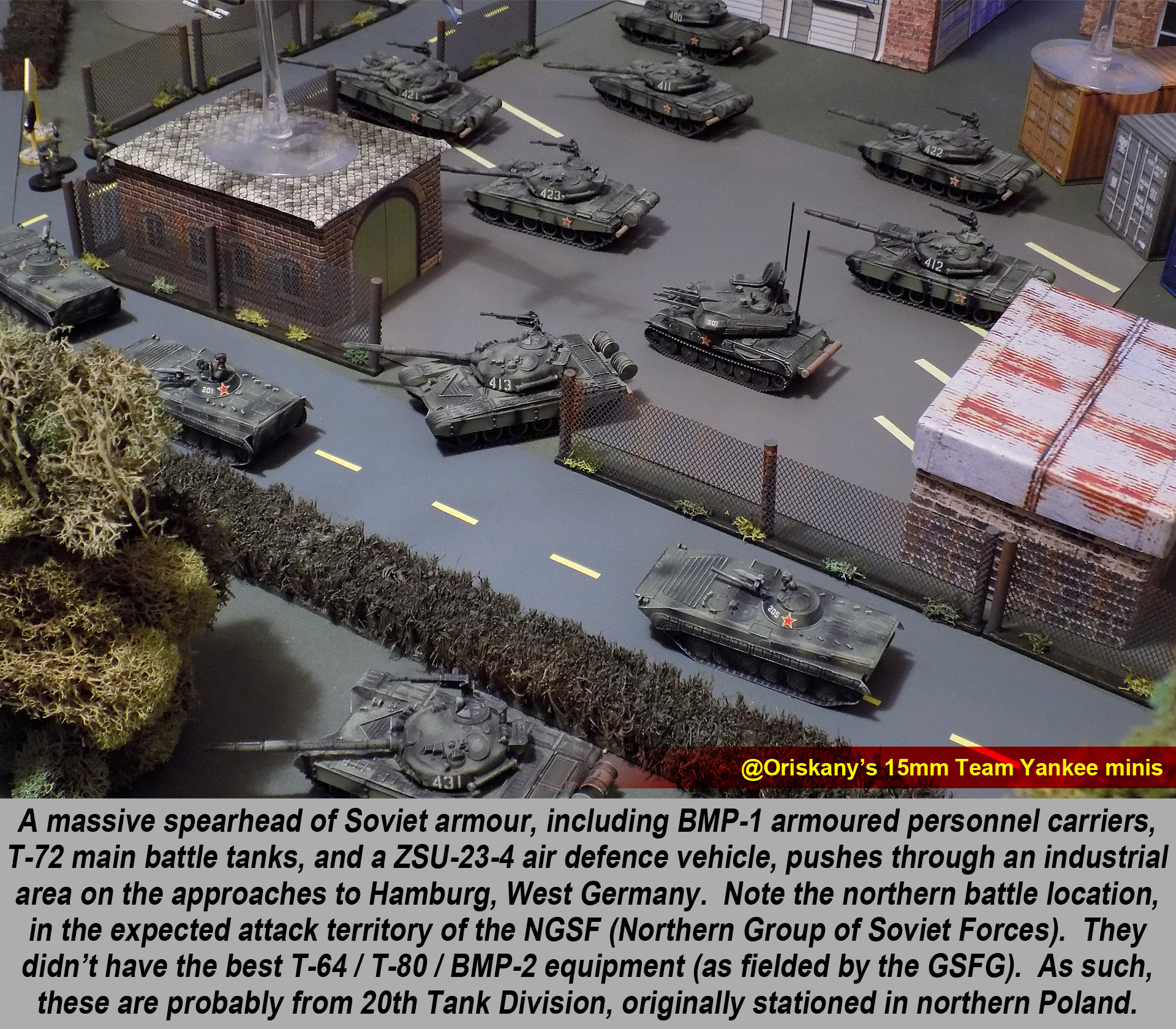
In the NORTHAG (Northern Army Group) sector, however, things are much tougher on NATO. The terrain is more open and flat, and many NATO corps just don’t have the budgets to field such immensely powerful combat units. Sir John Hackett has the Soviets reaching the Dutch border (in some places) on the third day of the war.
Breakthrough VS Containment
When a NATO-Soviet Pact war gets started on the ground, the first question on everyone’s mind is simply this: Do the Soviets score a breakthrough? Every other question, from whether NATO reserves can deployed in time (especially from the US), to whether the war goes nuclear, stem from this initial outcome.
A breakthrough is defined as a significant breach in the defender’s line. This breach must be large enough to allow follow-on formations (division size at least) to pass completely through and plunge uncontested into the defender’s rear areas. This includes dealing with defender’s reserves and defeating possible counterattacks.
This isn’t as easy as it sounds, no matter how big the attacker’s army is. This gap has to be ten or twenty miles wide, and needs at least one major transport artery to allow fast exploitation by the follow-on attacking force. This force must pass through the friendly regiments already in contact, which are doubtless in a state of damage and disarray.
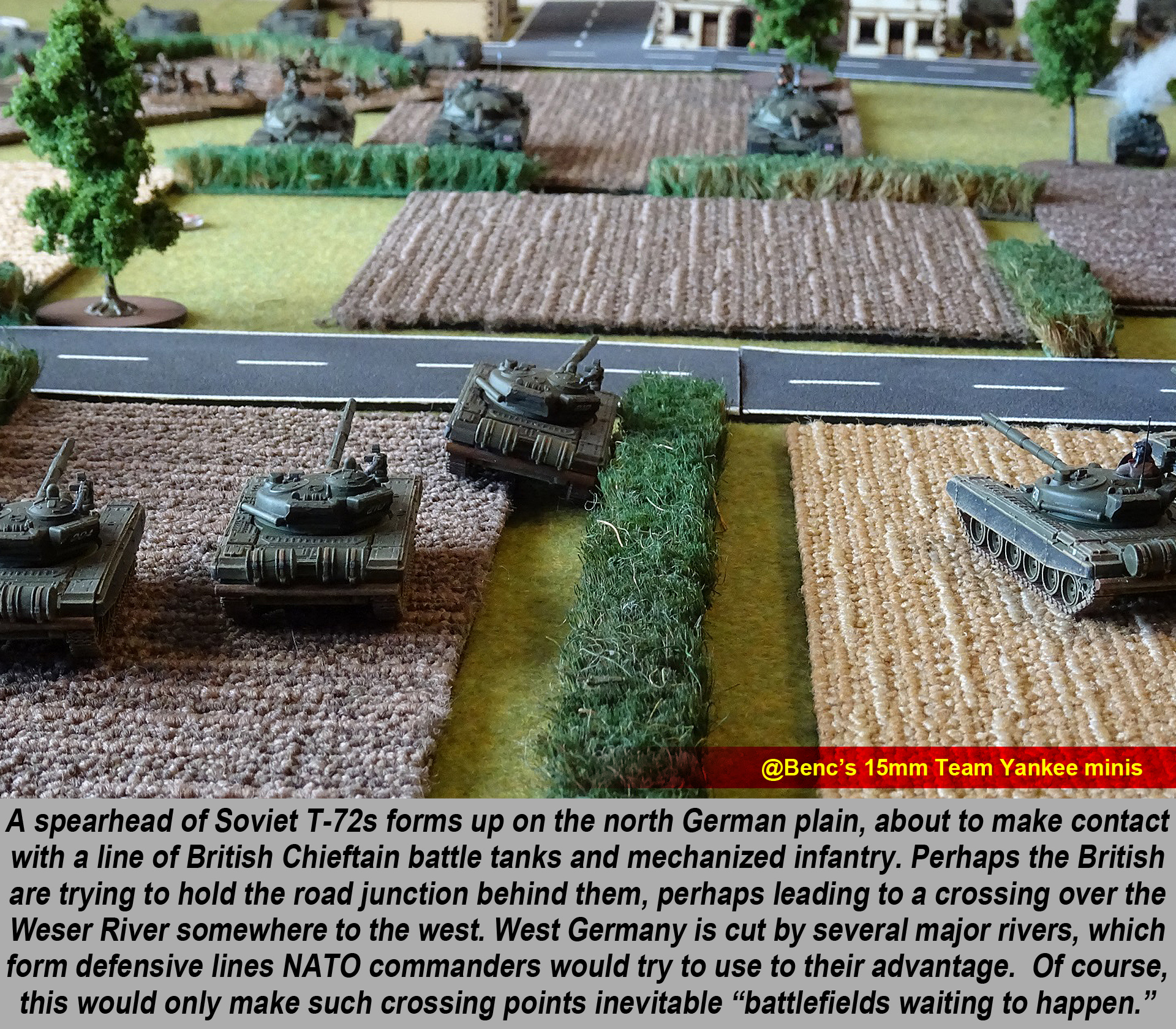
Lastly, this corridor has to be kept open for support and reinforcement of the exploiting spearhead. This means defending the flanks of the penetration from NATO armoured and airmobile counterattack, and its protecting transport arteries and follow-on echelons from NATO airpower.
If an operational breakthrough can be achieved, however, the war is probably won for the Soviets. Once the line is split, flanking Soviet divisions can “roll up” the NATO line to the north and south, stabilizing and expanding the breakthrough corridor. Given the depth of West Germany, the Soviets are probably approaching the Rhine River.
So for NATO, the object here clearly is to prevent a breakthrough. Given the huge edge in Soviet conventional and chemical weapons, the last thing NATO wants to do (especially in the north) is stand and defend the West German border in an inflexible line. Hence the “covering force area” previously mentioned.
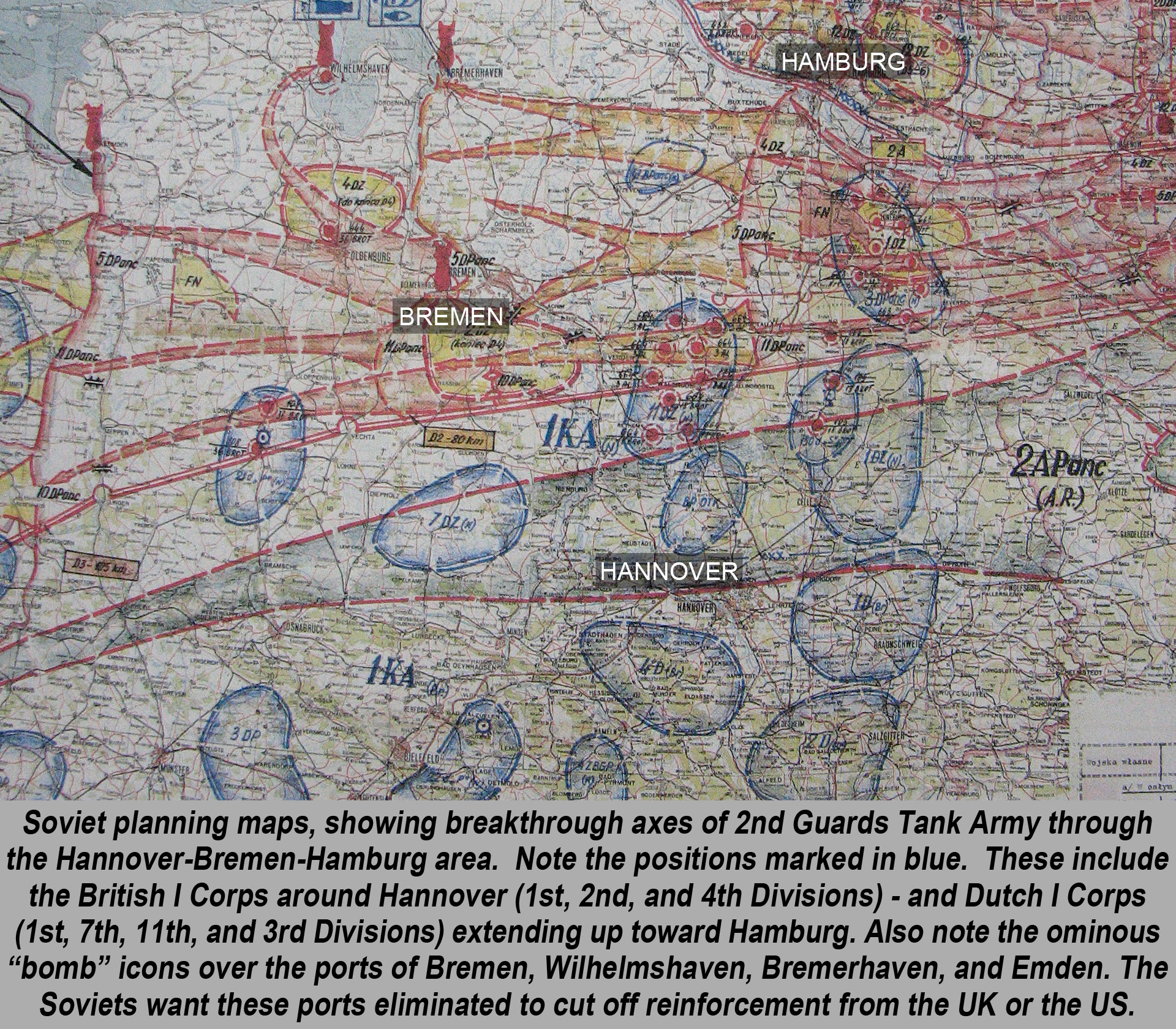
NATO goal will be to engage the Soviets, bloody them, and fall back, over and over. Grind down Soviet numbers with technological firepower, distance, and (if the opportunity arises) counterattack. This is tricky, though. Delay your retreat too long and your wings may collapse. Soviet airmobile may land behind you. Either way, you’re cut off.
The decision on when and where to counterattack is also dangerous. The first impulse will be to counterattack at the first opportunity. This is probably a grave mistake, as counterattacks that are too small or launched without mutual support or coordination are a waste of men and resources.
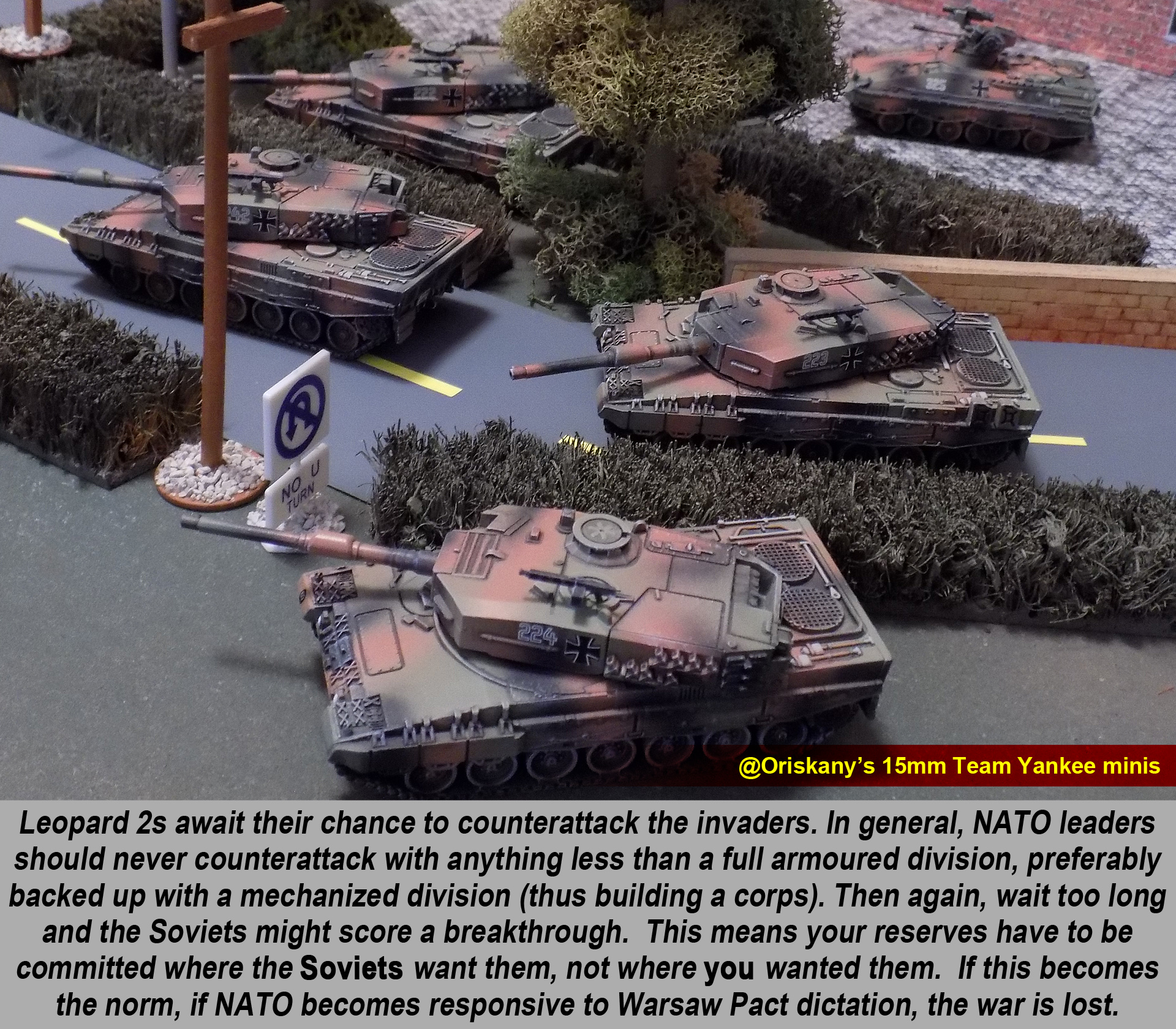
In any event, NATO has to maintain a deadly balance. Slow the invaders down long enough for reserves to arrive … but fall back fast enough so the line is never broken by overwhelming weight of Soviet combat power at a critical point.
The Question Of Alliance Unity
Another crucial question as the war develops into its second and third day with whether NATO or Warsaw Pact simply falls apart politically.
The Warsaw Pact COULD collapse under the shock and magnitude of a full-scale war. The late 1980s showed just how weak the USSR was economically and politically. And we’d already seen Polish unrest in the Solidarity movement. Would Polish, Rumanian, and Czechs march calmly into the (possibly nuclear) meat grinder?
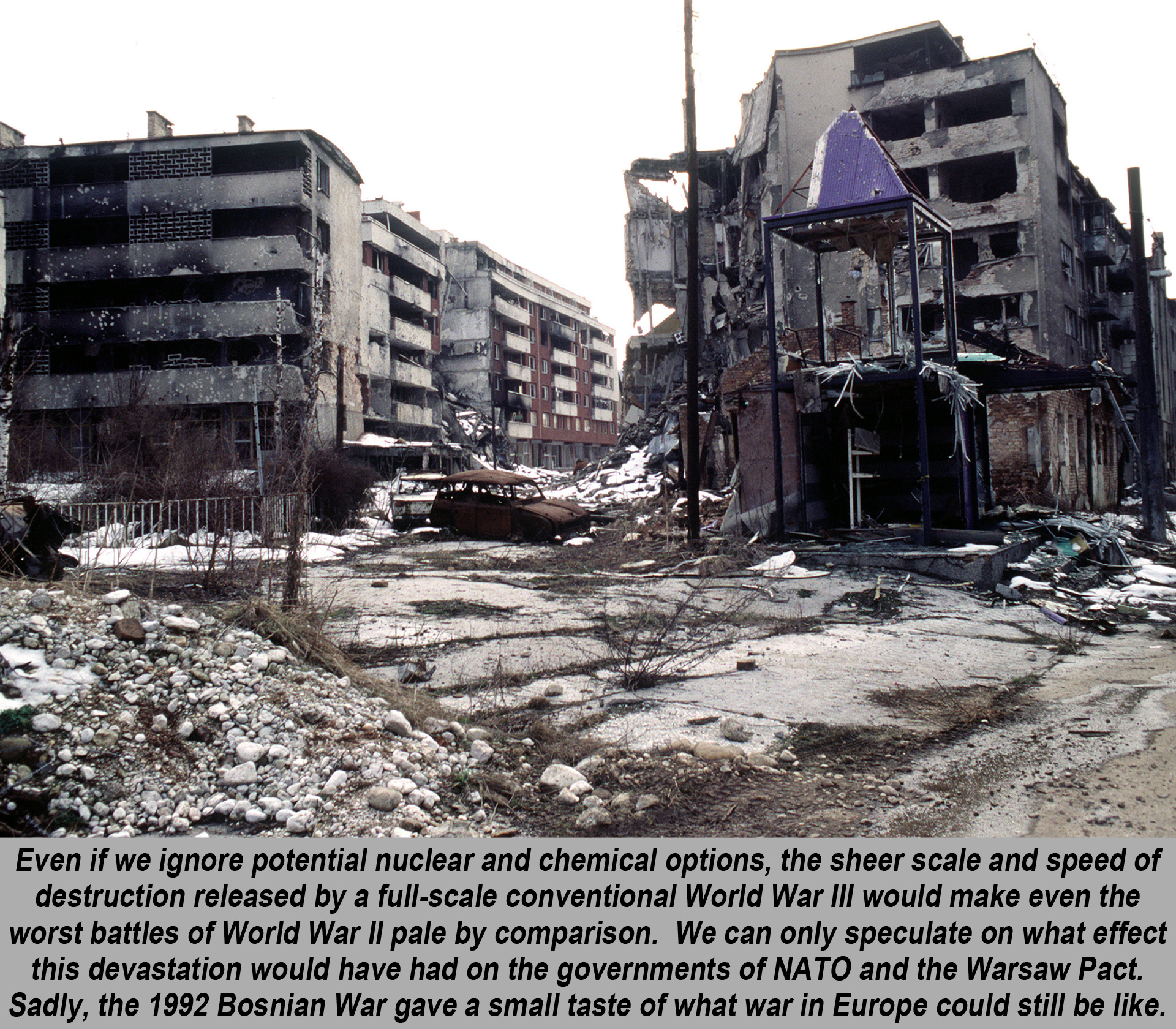
NATO is not immune to such pressures. West Germany is a potential weak point. As their country is subjected to unbelievable devastation (including mass chemical holocaust), as NATO generals trade German town and cities for time, and as the roads jam with refugees, might they simply cry “enough” and demand that NATO forces leave?
A Very Short War
One thing is sure. This war would be shockingly short. Sir John Hackett gives it ten days. In Ralph Peters’ superlative novel “Red Army,” World War III lasts three days. Unlike World War II, where no one was ready at the outset, here’s a war for which EVERYONE had been gearing up … for forty years. Then all that firepower is released at once.
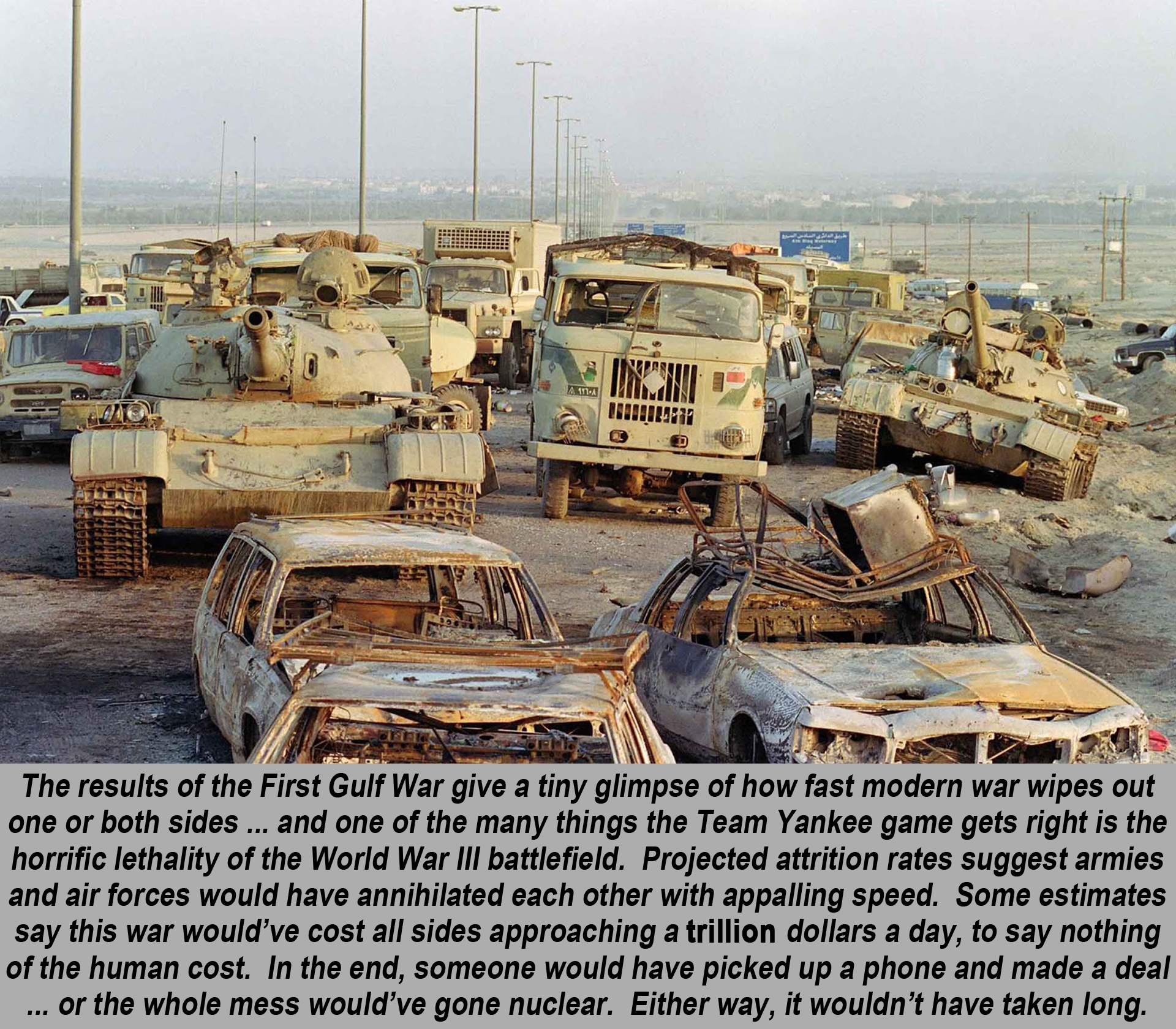
For a comparison, we can look at an example of when “Team Yankee firepower” really was unleashed … the 1991 Gulf War. In less than 100 hours, the Coalition allies effectively annihilated the 300,000-strong Iraqi Army, a combat-tested and heavily-fortified force rated at the time as the fourth-largest on earth.
Now imagine that Iraqi Army is just as well-equipped and motivated as the Coalition. Imagine it has 2 million men instead of 300,000. Imagine they have an air force three times the size as Coalition’s, a tactical nuclear option, and a chemical warfare capability unequalled on the planet. And imagine THEY hit US first.
The war still only lasts 100 hours. But those horrific losses are now on both sides.
We hope you’ve enjoyed this continued exploration into the “what-if” background and context of Team Yankee. As always, we welcome any feedback, questions, or comments you may have on the matter. This is a war that never was, after all, and all an exercise of hypothetical academics.
Are you participating in the “Red Thunder” Team Yankee campaign? What do you think of the situation in the campaign, and how is it lining up with the postulations presented in these articles? How is your faction doing, and what tips might you have for others ready to jump into Team Yankee?
If you liked this article and want to know more about the history behind Team Yankee, make sure to check out the Weekender Interview with oriskany below…

Click On The Image and you’ll be taken directly to the segment in the show to learn more.
If you would like to write an article for Beasts of War then please contact us at [email protected] for more information!
"Now it’s time to “start shooting,” and review some theories of how World War III in Europe might have actually ignited and played out..."
Supported by (Turn Off)

Supported by (Turn Off)
"Are you participating in the “Red Thunder” Team Yankee campaign?"
Supported by (Turn Off)















Firstly, I hope @oriskany isn’t having too bad a time with Irma knocking on the door and secondly I’m really enjoying all the articles and discussions that come afterwards.
There is one topic that is relevant here to the Nato tactics & buying time approach and would make for some interesting scenarios on the tabletop is the stay behind forces who were meant to let the Soviet front move beyond them and then act to hit communications and supplies behind the lines.
I think in terms of adding delay it would have some effect on the overall duration of the campaign as Soviet forces would either find logistic difficulties curtailing their advances or have to divert forces to deal with NATO forces behind their main advances.
Either way makes for interesting scenarios with same NATO forces attacking isolated HQs before reserves arrive or having to eliminate a number of objective before breaking through Soviet forces.
Thanks very much, @shart1979 – yes we have come through the storm okay, almost no property damage. Although power and internet access is spotty, so I may be be posting any “wall of text” responses here. 😀 I’ll keep up as best I can.
Great thoughts on the NATO tactics buying time with the “corps containment area” and how to work these into a tabletop game. we get into this a little in Part 05. When to counterattack, where NOT to, where, and how best to commit very limited resources … all these are important factors to consider as well.
Great read guys, I’ll comment later as my lunch break is over 🙁
Thanks very much, @brucelea – glad you liked it! 😀
Yup hope he’s fine, and good article as always. Read 3rd World War and Team Yanker not long after they camr out, Hackert did do a follow up book but Can’t remember what it was called.
IIRC it’s ‘The Third World War: The Untold Story’.
Thanks @bobcockayne – yeah, we pulled through . . . a little battered but unbroken. Trying to do the best I can at the moment with limited power and internet access.
Yes, @benc – The Third World War the Untold Story was the “revised” edition of Third World War: August 1985. Someone on last week’s article was almost mentioning some other books that followed.
As the others have said I hope @oriskany is hunkered down and fares well with Irma.
I am now in the process of moving house so @gri3elda and I are throwing all our worldly goods into boxes. I’ll do my best to jump here when I can and join the discussion.
Thanks for helping out, @benc . 😀 Yeah, we cam through Irma okay and now I’m hoping to get caught up with comments and threads. Good luck with the house moving! What a chore. I think I’d rather take the hurricane! 😀 😀
@benc Thanks for the well wishes! Other than power loss we are fine. Much better than you…we don’t have to pack, load a truck, unload a truck, and then unpack everything we own! Good luck with the move!
😀
I served in a Scottish infantry regiment during the mid 80s, and during that time the focus was on the anti tank role we would have and we drilled constantly with our NBC kit on using Milan and Carl Gustav 84. During a lecture with the brass about the possible conflict in Germany one of our boys asked what were our chances against such overwhelming Soviet numbers? I’ll never forget the answer the reply was ,”your fighting time and life expectancy is approx 2mins each” ha we nearly fell of our chairs .They then added that conflict was unlikely as diplomacy would win the day.Im glad it didn’t kick off but I think at times it was close. A 10 day duration of hostilities sound about right.
Thanks for joining in, @sulphur –
Yeah, the core of so many facets of the NATO doctrine was (1) buy time (2) kill tanks (3) survive expected mass Soviet chemical attacks. And this is just on the battlefield, the map in the article clearly shows some of the ports their plans called for nuclear targeting (shut down those ports so reinforcements can’t get in from the UK / USA).
The 5-10 day threshold seems to be the general consensus of many of the “experts.” Sir John Hackett gives in 10-11 days. Ralph Peters with Red Army gives it 2.5 days. The most probable outcome is that the armies would have basically annihilated each other by then. Someone would win out with a sliver of additional strength (it would probably be a thin sliver), or reserves of NATO Chieftains, M60s, and Leo 1s against Soviet T-62s/55s (and corresponding 2nd and 3rd line mechanized infantry).
The far more likely outcomes are (a) someone gets on the phone and offers a deal, or (b) the whole sorry mess goes thermonuclear.
Fortunately, we picked (c) – don’t have the war in the first place. 😀
Thanks @oriskany and @benc for this really interesting article.
I will just add some info from the back then Polish People’s Army. The really bold plan of Poland’s involvement in the III World War would expected the Allies to counterattack and halt the Soviet advance of day 3. This is where the Polish 1st and 2nd Armies were to attack and presumably on day 6. defeat the NATO Jutland Army Corpse. Also, on day 6 airborne and seaborne operations were planned for capturing Zealand and Copenhagen. 12 nukes were to be used in the process.
This said, the plan was accepted by the Soviets who presumably agreed to it because the attack routes of Polish forces were the ones least defended by NATO. As far as my knowledge goes they had a plan to use Polish People’s Army mainly as an auxiliary transport force in the opening days of the war that fortunately did not happen.
Great post, @yavasa – Indeed, we have some “LANDJUT” forces involved in in some great photos provided by @davebpg in Part 05. Chilling detail about the 12 nukes. I also like the information on Polish (and I presume other East Bloc forces) committed during a second stage of the plan (after GSFG, NGSF, and CGSF units had all gone in and perhaps been blunted and/or counterattacked).
Thanks again for the great post.
Always happy to commit if I can. I ordered Red Thunder because of you mister 😉 The funny part is I got the rules, the Afgansky supplement, soon Red Tunder and still no miniatures 😀
Ah, I probably should have said that. Red Thunder is the book that expands the rules set and background info to include new Soviet forces (including T-64s)
The actual T-64 tanks (and other vehicles) come in their own miniature packs.
http://www.flamesofwar.com/Default.aspx?tabid=117&ProductID=7097
Hi
There were in fact two full strength British forward EW Regiments at the time of this scenario, plus an air mobile component in UK, along with 3 squadrons (equivalent) that could have been mobilised from the Province to fill gaps and BCR.
RAF also had a major static presence to support forward airfields. The Battle for the spectrum would have been critical in the early hours and Combined with partner assets, NATO actually had a comparable chance of effectively “screwing with the Soviets ability to communicate”. There were dedicated assets whose entire existence was ECCM based (Electronic Counter-counter Measure) to assist in targeting the opposing units.
Now a days EW still forms more than 60% of the RSignals function
Awesome information, @bonesbs , and you’re correct about one of the primary efforts of NATO EW operations being focused on disruption of Soviet / Warsaw Pact communications. In Red Army, Ralph Peters protrays Soviet commander struggling constantly with their inabilities to communicate due to NATO EW interference. It was hoped this would be especially effective given the Soviet reliance on more centralized command structures.
Just as an aside, we need to remember the Electronic War was happening, all be it passively constantly anyway. British and I would guess US Baselines were deployed and active so were the USSR. It would have only been a case of who pushed the aggressive switch first for the advantage. Personally I think the West’s SIGINT capabilities were higher.
We need to remember the Electronic War was happening, all be it passively constantly anyway.
This is very true. Signal stations on both sides were always trying to pass information to and from cells each side had in the other’s territory, not to mention test and and probe signal communications of the other side. Passively listening in / trying to decode, actively with actual jamming or (if memory serves) experiments with destructive microwave or other wavelengths that actually would overload, blind, or shut down the other side’s listening devices.
I would also agree that SIGINT was better on the NATO side.
(prepares tinfoil hat … )
There was also talk about some form of organised resistance.
It’s kind of what the Soviets did when the Germans overran their defenses in WW2, except by NATO forces.
Codename : Gladio ( https://en.wikipedia.org/wiki/Operation_Gladio )
‘officially’ this operation was cancelled in the 90’s, but as with any of these ‘classified/conspiracy’ topics there’s no real reason to assume that it was cancelled for real (it’s impossible to proof something that is designed to be classified … ).
// —
Modern warfare is hell on earth … especially at the scale we were (and technically are) preparing for. Heck, armageddon would probably be a better name. I’m glad both sides came to their senses although things are getting pretty scary these days given that Putin is trying to reestablish his dominance over the ‘lost’ territory.
I really doubt there’d be much of NATO/EU left after that initial strike, because there will be a definite jealousy vs the Americans simply because it’s not their homes that get destroyed.
The ‘retreat’ by our ‘help’ isn’t going to do wonders for morale. OTOH these guys were/are part of the local community too, so who knows what would have happened …
One thing I remember from the anti nuke protests was the slogan “better Red than dead” (‘red’ = live under soviet rule )
(wiki : https://en.wikipedia.org/wiki/Better_red_than_dead )
Is that someone knocking at your door @limburger, no tin foil hat’s going to save you after mentioning the G word!!!
ssst …. I’ve got booby traps and such.
They won’t survive the boobies …
oh wait … I think I can hear helicopters …
Wish me luck 😉
When i was at the barras / Bundeswehr, the cold war was over, but we had some long terme professional soldiers, who said the same about 2min life expectancy. When i left the army i said i will never touch a weapon. These are too dangerous in some situation. Everyone heard a story about a comrade shoot by accident.
An other great one, now I almost go digging for the Team Yankee stuff
Thanks very much, @rasmus ! Glad you’re liking the article series. 😀
great article, in leading from the Front: An Autobiography
Book by Richard Dannatt. He describes how the giving up ground was actually a double bluff to make the soviets think they were doing a feigned retreat as a hope that the soviets would not push hard and make it all the way to the channel. He talked about it really being to buy time for a coordinated nuclear strike. I found that very interesting coming from the ex head of the British army.
Interesting information, @jadealien –
I’m afraid that most of the more plausible WW3 scenarios in 1980s Europe lead to some kind of nuclear exchange. Most Soviet plans I’ve been able to find include initial nuclear strikes along the Channel and North Sea ports. NATO planning involved the coordinated nuclear strikes you mention. The Soviets probably would have probably cooked off at least tactical battlefield nukes if NATO defense / delaying actions were proving too successful, or worse, if they NATO forces were somehow re-invading East Germany of Czechoslovakia.
My uncle confirmed that to me out of the blue via his explanation,I assume from his theory in the British during the 70’s as he was in active service as a driver. He said the big concern and this always freaked me out was the communications black out window during a short ranged tactical nuclear exchange and that meant ETA on bringing it back up or alternatives, he did say a time to me but i cannot remember anymore I was a teenager at the time and now in my thirties. As for the soviets you were talking about I assume that is 152mm shells and up.
@oriskany – Would it be relatively possible for the war to escalate to nuclear on a massive (worldwide) scale? And how possible would it be for the militaries and countries involved to have a communication and command breakdown on a similarly massive scale? For instance, would the surviving US forces in Europe be left essentially on their own with mainland America cutoff and reeling from the devastation of hundreds or more nuclear strikes wiping out cities and infrastructure? How about forces from both sides deserting, going rogue, or even taking control of a small surviving town or population center and becoming a sort of mini-government? Do you think that there’d be enough communication and command/control left on both sides for something like an ad hoc Nato and Pact to exist? Would the fighting continue to push across entire fronts or would the majority of conflict settle to uneasily guarding no man’s land and skirmishes between units that get too close?
Sorry about the question cannon. I like alternate history as a genre and am trying to come up with a background for my Western German forces. Which may or may not include finding an excuse for them to use a non-camo paint scheme.
Not bad questions at all, @dmgdmind – in fact GDW’s old RPG “Twilight 2000” game poses many of these same questions. If you haven’t read the backstory, you might find it interesting (it’s an old game so it’s available on ,pdf somewhere I’m sure).
Basically. WW3 starts in 1995 with major nuclear strikes, but somehow staggers on for 5 more years. By 2000, all the world’s governments and civil societies have unraveled, half the world’s population is gone. The militaries (the ragged remains) go rogue, and its each unit (or each man) for themselves. Some commanders become local warlords, raising and training their own militias, and start their own little wars in the ruins and ashes of the old world.
We took a similar tack with our post-apocalypse tank “online RPG” we ran here on Beasts of War a while ago.
http://www.drivethrurpg.com/browse/pub/4/Game-Designers-Workshop-GDW/subcategory/21_23/Twilight-2000
In short, if I understand your objectives – its definitely doable. 😀
Woooooo! That’s what I was looking for, thanks for the quick and awesome response!
As to the NATO and WARPAC survival past the initial attacks, If it started in a satellite area of the world I think there would be a greater chance for the Warsaw Pact to fall apart. Starting in the 1950’s the cracks were forming and the need for centralized command would allow for the more western orientated countries to use it as a time to break away for more independence. This may be a way for the national leadership to maintain control but I do believe there would be break by many. (Some of this comes from security information that was umm … leaked?… yeah let’s go with leaked)
As to the collapse of NATO I think there would have been a very good chance for it to be a USA, British and W German fight. Most of this would come down to the politics of why it would start. This is something that Clancy and Bond did a good job of looking at, even if it wasn’t a strong argument they made, in RSR. NATO was also in political turmoil in the 80’s with many “western” countries aiming at strong socialist programs. There has been and continues to be a lot of mistrust in NATO. Oddly there may have been a few units that would have held the line even if ordered to leave the zone of combat.
Most certainly agree, @ghent99 , that the cracks were already spreading in the East Bloc by the 1950s. Hell, the Hungarian Revolt of 1956 proves that if nothing else (To say nothing of Czech uprising of 1968).
There were indeed strong socialist and antiwar movements in West Germany (and other NATO states) in the 1980s. And its definitely possible West Germany may have cracked – they would have been by far the hardest-hut nation, after all. This also depends on what the Warsaw Pact’s aims were, simply taking all of Germany (to then dominate central Europe via a communist united Germany) or push all the way to the Channel or beyond. In the latter case, for example, Germany cutting a separate peace doesn’t necessarily end the war.
I did my time in Germany in1979, our back was against the Rhine, the French stated policy was they would not use nukes on French soil.
Which left us believing the French would nuke us if the Soviets got to us (the 5th line of reserves)
P.s. Our equipment was worn out junk (apc’s that leak like sites) etc…
Thanks, @pongo50 . 😀 And welcome to the thread!
Yeah, I’m pretty sure the unilateral and sovereign freedom to use their strategic assets (nukes) any way they wanted was a big reason France initially left NATO in the 60s. When a nation joins NATO, they understand that many military decisions are shared. When it came to nuclear release, I don’t think the French wanted their options bound by anyone.
I had to do some research on gas masks after 9-11 and found out all of our gas masks both nations/Soviet were junk and would not have protected any of us trusting young people.
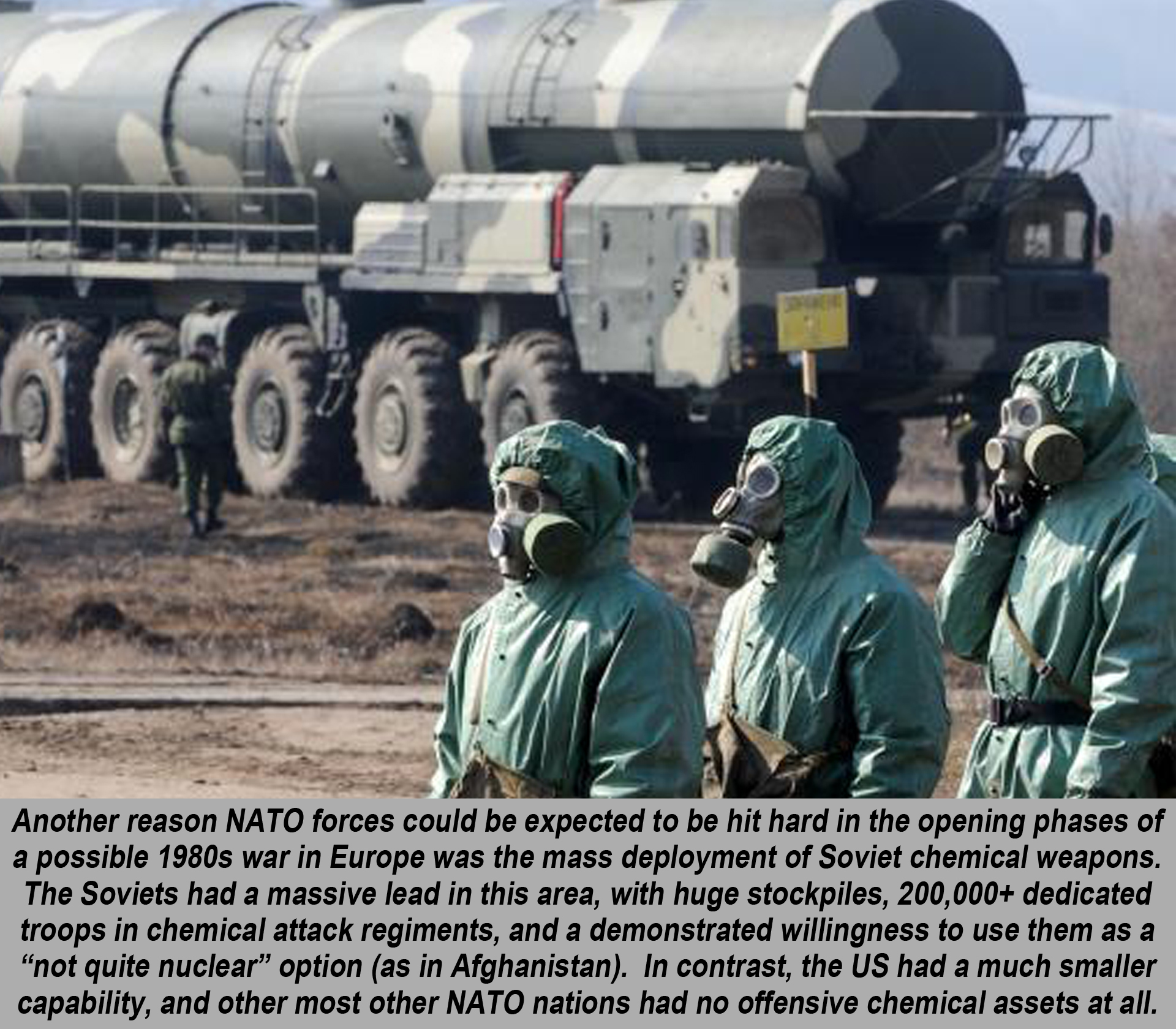
Gas masks, certainly not. I think by the 80s most nations were using nerve agents for their chemeical attack option, which can attack the central nervous system through the pores of the skin … i.e., only a full MOPP level 4 suit gives you any chance at all.
Gas masks offer some protection from blood agents (neutralize the blood’s ability to carry oxygen – has to be inhaled), which I think was in use before nerve agents. And of course before that we have the ole’ reliable (or actually, UN-reliable) mustard gas.
Although you may be right. When they marched us into the gas chambers for recruit training and then for a pre-Gulf One “refresher” course, those gas masks didn’t seem to do much against the simple tear gas they were choking us half to death with. 🙁
Double dose for me today – really enjoyed part 2 as well as 3.
One scenario which I notice you don’t seem to be exploring much is the Soviet victory. All of the scenarios involve a lot of ‘what ifs’ that mostly end in nuclear war (or a phone call and a ceasefire if we’re lucky). Which sort of implies a ‘draw’.
But if the Soviet first strike worked as it was presumably intended, it doesn’t seem that far-fetched to imagine Warsaw Pact forces basically taking over most of continental Western Europe. If nuclear war could be avoided somehow (or kept to a ‘minimum’) we might have a scenario that ends not in stalemate, but victory.
Soviet Victory … ah! Part 04 “prognosis” delves deep into Ralph Peters’ “Red Army,” a Red Storm Rising / Team Yankee type novel told entirely from the Soviet perspective. I don’t want to ruin the ending, but …
all great books.
Red Army is my personal favorite – @zorg – but that may just be personal opinion
Ha ha, okay – I’ll wait in suspense!
No real suspense, @angelicdespot – just making a mention that at least one of the recognized and published authorities in the field believed that a Soviet victory was indeed possible. Ralph Peters was a Lt. Colonel in US Army Intelligence, working in West Germany, specialized in Russian studies. So he’s speaking from authority. And on top of that he’s just a freakin’ superlative fiction writer. You get to know and care about these Soviet characters, you’re really pulling for them by the end.
Just don’t get too attached to all of them. The book has a death toll that makes Game of Thrones look like a Bob Ross painting show. 😮
Hmm… Another thought…
What’s driving a lot of the thinking behind this series – and the Team Yankee game – is the desire to play a wargame with Cold War kit: one that feels as realistic as possible but not so realistic as to be boring because of the nuclear exchange scenario.
So as we’re looking at alternative history, perhaps it might be interesting to cast the net a bit wider… to look at scenarios that are perhaps a bit further from reality than the set up for this war is, but which enable us to play a somewhat realistic and still interesting war game.
Perhaps easier to explain this by example…
Instead of saying ‘a war would most likely have kicked off this way, and followed this course’, we go back in time a bit further and change the political context for the war.
e.g. Imagine Yugoslavia fell apart in the mid 80s instead of the mid 90s. That in itself would require quite a bit of rewriting history, but if we went with it, we might find an opportunity for NATO and the Warsaw Pact to intervene with ground forces in a theatre which was somewhat quarantined from the wider European theatre. It wouldn’t need to start with a massive surprise attack, which would make setting a wargame there easier. And while a war across the border between the two Germanys would be such high stakes that the armageddon scenarios we’re looking at seem almost inevitable, a gradually escalating war in the Balkans in which both sides expect and want the war to remain largely within the borders of the former Yugoslavia might be ‘unimportant’ enough to allow an interesting game to take place.
These are very good ideas and solid commentary, @angelicdespot – I hate to keep saying “we cover this later, we cover this later …” but we do cast a slightly larger net in Part 05 – Campaign Ideas. What does Team Yankee look like in settings other than all out WW3 in Europe.
I for one, have two Desert-themed ideas. I wanna get ahold of some T-62s, T-55s, and M48A5s (along with Centurion upgrades) and run some 1973 Yom Kippur War “prequel” games.
Or, go the other way. Get all these T-72s, but some sand-tan paint on them, and run battles from Gulf War One. Of course M1A1s would work for US Army, but the LAVs and M60A3s I think are coming out for the “Stripes” release would allow a USMC Desert Storm force – a subject close to my heart. 🙂
You example on Yugoslavia is great. Start a more “limited” war that both sides are determined to keep a “regional conflict.” You hit the nail on the head about backing up a little in history, changing a few details, and then running the clock forward from a revised origin point.
We took this same approach (with a little more tongue in cheek) when we cranked out the “Lloydoslavian War” were NATO just flat-out hits first and invades Eastern Europe. Obviously you have to make a lot changes here, but backing up a few decades, making small and plausible adjustments to PREVIOUS conditions, then running the clock forward, can definitely bring you to some interesting places.
To be honest I still want to take some T-80s and T-64s (probably T-64K upgrades) and put Russians (or pro-Russian separatists) against Ukrainian national army.
a great informative read.
it will be a rolling retreat with tanks/APCs replacing troops covering each others retreats using terrain to boost their defences @oriskany
Definitely right on the terrain, @zorg . This was one reason the big Soviet breakthrough is almost always predicted in the north. It’s not that the British, German, Dutch, Belgian, and Danish forces up here wouldn’t have fought hard, but the terrain is just so much more open here, favoring the kind of mass-spearheads tank assaults the Soviets were likely to use.
Hence why the British spent the first 24 – 36 hrs laying minefields 1 to 1 1/2 Km deep along with anti tank ditches, covering fire positions and then rigged every bridge in our sector to blow (if we hadn’t already blown it 😉 )
In Canada we practiced units withdrawing over live bridge demolitions and then lighting it up after the last tank got across. We all knew we were only going to head in one direction until either there was nothing left of us, or them.
Epic, @brucelea – Preparations like this is why sometimes a miniature rules set starts to run into some issues for me. To recreate what you describe on a Team Yankee table top you’d need a table 10-15 meters (40-60 feet) deep.
So I’m not trying to knock holes in Team Yankee or encourage everyone to play with 2mm tanks. But scale is sometimes helpful to really put the perspective in the minds of a wargamer. Okay, minefields 1 – 1.5 kilometers deep. Most wargamers would shrug.
Challenge them to push a Soviet Team Yankee force across a table 60 feet deep, taking losses all the way, and suddenly the context of what you’re describing becomes clear. Then cross a bridge that is likely to blow up in their faces, or, even worse, with a column of vehicles on the bridge (or would you have let it go that long, risking the Soviets finding and defusing the explosives).
Mmmmm 60ft long table 🙂 now that would be an epic game! How long is the BoW studio again???
There you go, @brucelea – . We need to figure out a way to rent an indoor tennis court for like a week, have them take the net down and just pack that whole area with terrain. Everyone brings their Team Yankee armies and we have the mother of all mega-games.
Simple cardboard edifices can be but over the two poles for the net to look like skyscrapers (with smaller buildings and roads around them).
.
Just everyone has to be verrrrry careful not to step on terrain or miniatures.
Also, we have to get those knee-pads construction crews or even soldiers sometimes have, since we’ll be on our hands and knees to check lines of sight and such.
it is difficult to hide a tank on a billiard flat field.
Truer words never spoken @zorg . 😀
Another great read! Nothing like reading about a potential third world war to take your mind off hurricane damage and no power.
Again, I really appreciate the unbiased views.
Thanks, @gladesrunner . 😀
Hi Hi, I know you talk about a short war but army wor-games put it about a week to ten days, so you’re spot on there.before we were backs to the water once more and they have seen the Warsaw Pact winning…
All the new tech at the time we had on our side, would not count for MASS of the rolling Red Armies numbers overwhelming NATO forces… So said the top brass…. So say we all.
Another thing to consider is how an advancing army looses energy/mass/momentum as it advances. Assuming a Soviet first strike, and assuming a fighting withdraw via NAT corps containment / covering areas (punched up with local or … better … operational-scale counterattacks) …
As the Soviets advance, especially the deep spearheads, the units get thinner and weaker. Combat attrition, supply, maintenance, all these are factors, but the big one is the actual ground “soaking up” the advancing force. When we see these big attack arrows sweeping dramatically across a battle map, we have to remember that these forces have to detach units to brace their flanks or occupy rear areas for security and logistical / communication lines. As these holding units are detached, the spearhead gets weaker, until the infantry comes up to take over these occupation rolls, so goes the theory).
So who knows how deep the Soviets were really aiming to push? Or capable of pushing. My guess is the Rhine for a Soviet-dominated communist united Germany.
Great article, I’m surprised you haven’t mentioned the British wonder weapon, ‘Operation Blue Peacock’ a Nuclear land mine which had ‘live’ chickens put inside to keep the electronics warm whilst buried underground, with a supply of seed to stop them pecking the wiring!! Lol.
I have honestly never heard of this, @ozzie . Thermonuclear chickens! 😀
Great series, oriskany.
Auto correct diving me nut!
Ozzie, interesting idea and totally plasable, the mind set of the day was totally “Dr Strangelove”
Thanks, @pongo50 – glad you like the series so far. 😀 Check back next week for Part 04. 😀
Things we remember, as we (Canadians) were with the 5th line of reserves, our German compatriots were using M48’s we had just got rid of ourCenturions from 1952, and we’re leases get leopard 1’s. Word was that the East Germans GDR had units equipped with M48’s funnelled in from Vietnam to use as decoys ala battle of the Bulge.
Thanks, @pongo50 – I have certainly heard of Bundeswehr starting off with M48A2s and A5s and, and Canadians with Leopard 1s. I never heard of East Germans collecting M48s to use as “Trojan Tanks.” From Vietnam? Were these captured by the Vietnamese from Americans in Vietnam and sent to East Germany via the USSR? Interesting. 🙂
Great article !! Keep up the great work . Love all the extra information on this topic .
@mattrendar – Thanks very much, glad you like the series so far. 😀
Great read guys, loving it all so far 🙂
Awesome. Thanks very much, @olliep .
So this is a rather late addition to the conversation, owing largely to the fact that I only recently found this article series. I don’t anticipate this getting any sort of response but I did want to say a few things. Notably, the authors come to a few rather incorrect conclusions, in particular regarding the efficacy of Soviet forces as well as the manner in which a 1980s World War III would play out.
On the topic of Soviet Forces, while it cannot be denied that the Warsaw Pact boasted significant numerical advantages as well as an effective doctrine on paper, much of these advantages are negated by the flaws inherent to the Soviet system. First is the inefficiency, corruption, and graft that permeated every facet of Soviet life. In a society where even the most basic goods, like toilet paper and basic food stuffs, were subject to severe shortages even to the collapse of the Soviet Union, not even the military is immune to effects. Examples include the Blinder bomber, commonly called the “Supersonic Booze Carrier” due its air conditioning system using a form of ethanol effectively identical to Vodka, as well as the death of the entire command staff of the Soviet Pacific Fleet in an airline crash at Pushkin Airfield after using their visit to Leningrad for a staff meeting as an opportunity to shop for groceries. When Admirals are required to use a business visit to the second capital of the USSR to shop for basic necessities like food, what do you think the conscripts are doing?
Another issue hounding the troops would be the all pervasive effort of Soviet officials, both military and civilian, to cover their own backside when reporting to their bosses. One need look no further than the Chernobyl disaster or the repeated Soviet efforts to cover up or diminish various accidents such as K-19, the Pushkin disaster, K-129, or K-431. When we consider the lengths that even the highest levels would go to to avoid admitting failures or disasters, then one can only imagine the sorts of lies, half-truths, and ommissions made at lower levels to avoid the ire of superiors.
Of possibly greater importance is a long running issue in both the Soviet and modern Russian armies, Dedovschina (roughly translating to reign of old-timers), a system in which conscripts approaching the end of their service period use that position to bully, haze, harrass, and manipulate younger conscripts, including NCOs (who, in the Soviet Army, were just conscripts selected for extra training). The issue dates back to the Tsarist armies of the Russian Empire and involved brutal acts of bully and humiliation that has, on numerous occassions, left conscripts dead. Anyone who has served in the Armed Forces of any nation can vouch for how vital trust in your comrades is and the simple fact of the matter is that such trust did not exist in much of the Soviet Army due to the Dedovschina. The existence of that tradition would, did, and does have a deletrious effect on unit cohesion and morale, making effective operation in the field difficult at best and impossible at worst.
Finally, on the doctrinal side at least, is the inflexible nature of Soviet doctrine. The Soviet military employed a strict and rigid doctrine, almost a scientific forumla. Deviation from doctrine was heavily discouraged and it included everything from the number of artillery shells that should be fired to the timing of advances of infantry and tanks. Lower level officers, such as platoon leaders and company commanders, were discouraged from showing initiative, unlike most NATO armies which emphasized flexibility and encouraged lower level commanders to act on their own initiative in combat. This inflexibility would be a hindrance for Soviet combat operations and, when combined with the institutional failings of the Soviet system and the morale issues caused by the Dedovschina, would do much to negate the Warsaw Pacts advantages.
Now we come to the meat and potatoes of the issue: the conclusions drawn of how a war would play out. First and foremost, chemical weapons would likely not be deployed by the Soviets. Not for any doctrinal reason, mind. Soviet and modern Russian doctrine call for the use of chemical and nuclear weapons as tactical and operational level weapons to achieve tactical and operational goals. NATO doctrine did the same. However, the use of both types of weapons was heavily restricted to the political leadership of both sides, making the release of chemical weapons a political decision taken by the Politburo rather than by field commanders. More importantly, and the real nail in the coffin for the use of chemical weapons by the Soviets, was the simple fact that NATO would retaliate to chemical weapons use by deploying atomic arms. This is largely down to NATO lacking a chemical arsenal to match the Soviet one but also a calculated deterrence effort on the part of NATO. The idea being that nuclear weapons are mostly considered a higher rung on the escalation ladder than chemical weapons, so responding to chemical weapons with nukes would deter the Soviets from using chemical weapons in the first place.
Second is the rather odd assertion that the Gulf War bears any resemblance to a conflict between NATO and the Warsaw Pact. Despite the on paper statistics and the fears of many at the time, the 1991 Gulf War was a forgone conclusion. Iraq’s economy was shattered by its war with Iran and its army, mostly made of conscripts, was a spent force with morale that effectively didn’t exist. But the most damning of all is the fact that the ground war may only have lasted 100 hours but the war was won before ground troops even crossed the border. The Coalition Air Campaign lasted a full month and completely annihilated the Iraqi Air Force on the first day. For the rest of the war, the Coalition enjoyed complete, unquestioned air supremacy, allowing them shatter Iraqi formations at will. Such a happy state of affairs is likely impossible to achieve in a war between NATO and the Warsaw Pact, where the air forces of both sides are large, dispersed, and most importantly VERY ready for this fight. A war between NATO and the Warsaw Pact would not be over in 100 hours of ground combat. It would become a grinding, attritional fight after the first few days as Soviet Category 1 formations were forced to halt by continued NATO air attacks on supply lines and attrition at the front. Less capable Category 2 and 3 formations would have to be brought up and thrown into the fight against NATO forces reinforced by 3 or 4 divisions of US troops who would be airlifted in to take possession of the massive quantities of POMCUS war stocks. Germany would very quickly become a moon scape as NATO and Warsaw Pact formations try desperately to achieve some sort of advantage, all without the air support that their doctrines require and with new supplies of men and material greatly hampered by air, artillery, and naval interdiction.
In this way I think the Team Yankee game actually does a good job of demonstrating this. Fighting in Europe bogs down after about a month, resulting in the Warsaw Pact and NATO expanding the war into the Middle East and the Nordic countries in an effort to outflank positions in Germany or to open new fronts to draw men and material away from the fighting in Germany. This is reinforced further by the Red Dawn expansion that sees a Soviet invasion of the United States, aimed primarily at drawing US and Canadian attention away from Europe.
The reality is that the Soviet Armed Forces were products of the nation they belonged to, which entailed severe institutional failings that were overlooked in these articles. However, even with all their failings the Warsaw Pact and NATO were peer adversaries, with such massive forces in Europe that any conflict would not last mere days or weeks but months, even years. And as casualty averse as NATO nations were, that changes VERY quickly when your homeland is under attack. Time and again it has been demonstrated that people will fight to the bitter end to defend hearth and home and that should not be discounted even when talking about NATO.