


































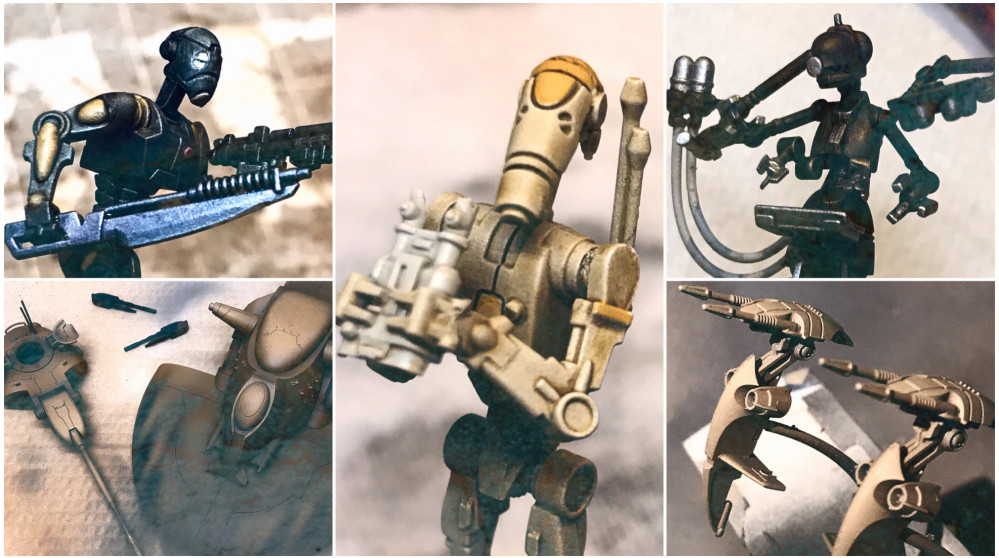
The Thin Beige Line



Recommendations: 1077
About the Project
With a hoard of droids to paint, I need a process that is quick, repeatable and relatively painless!
Related Game: Star Wars: Legion
Related Company: Fantasy Flight Games
Related Genre: Science Fiction
This Project is Completed
Construction
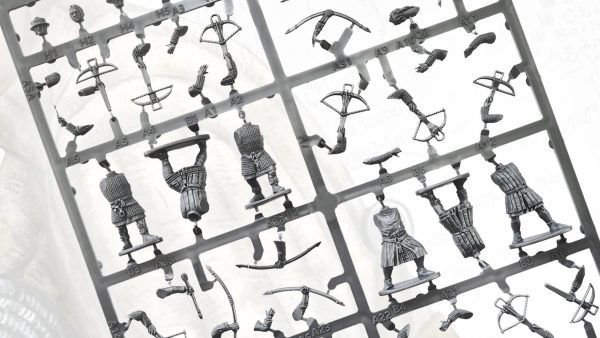
When I opened the Clone Wars core set for the first time I was surprised (and a little horrified), to be confronted with Sprues. It had been a while since I’d built a model from a sprue, much less multiple units! So it was with trepidation that I reached for my cutters and poly cement.
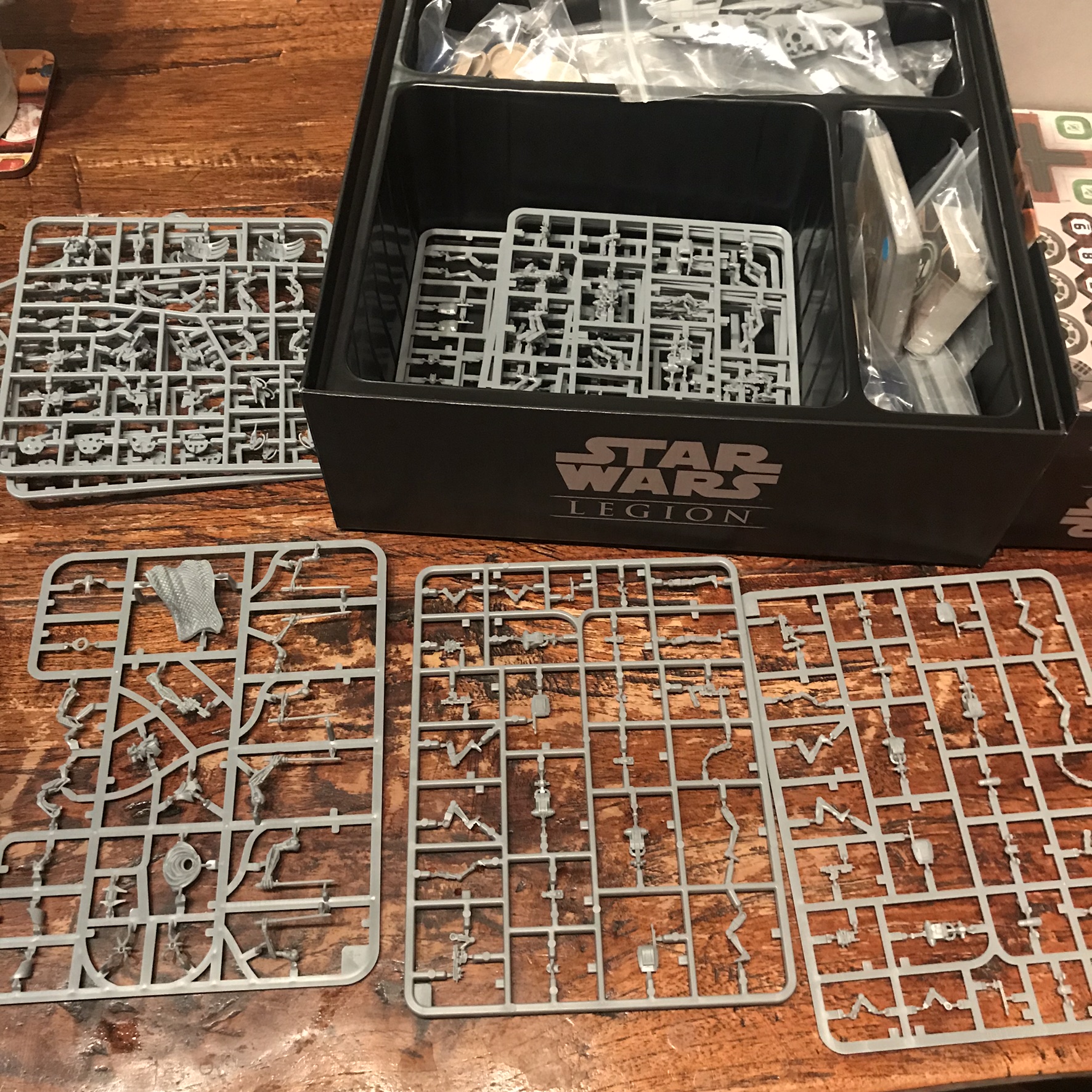
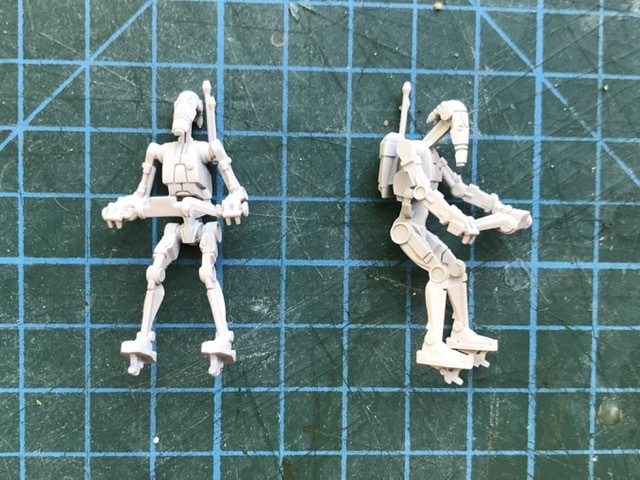
Taking a good look over the components before starting to clip things off, I found that the Droid head’s and torso’s were all identical, with legs and arms designed in pairs to fit any figure. This allowed me to assemble the legs, torso’s and bases before revisiting the models to pose the arms and heads. I have to say I really enjoyed putting the B1’s together (although the two part heads are infuriatingly fiddly).

Something to look out for if you are ignoring the instructions (as I did). The backpacks for the heavy weapon droids appear the same as the others but have a small notch on the inside edge. This is for the loose E5 blaster rifle to connect to, allowing the heavy weapon droids to carry the standard rifle on their packs.
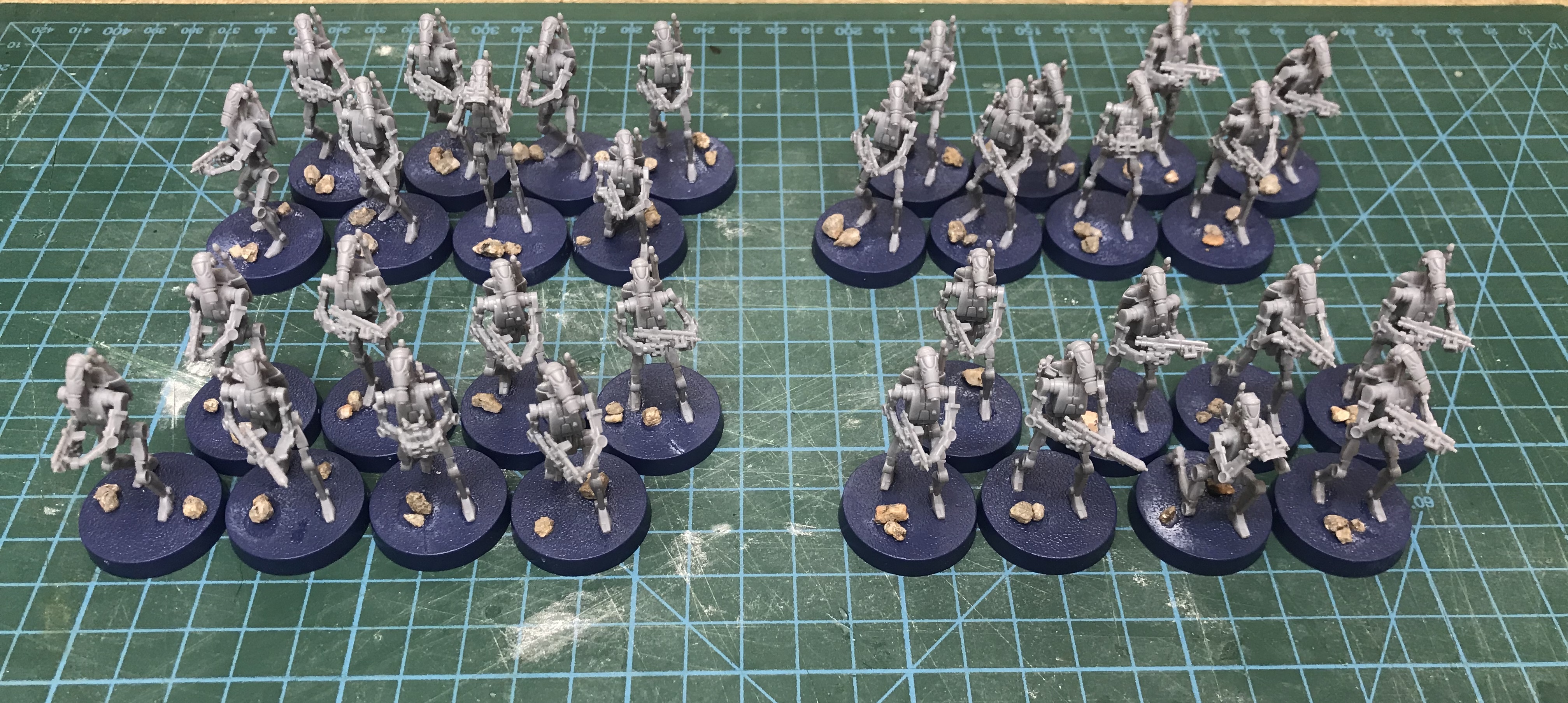
Having swapped the Clone half of my core set with a friend for his Separatist half, I had four units to build. By mixing which leg positions went with which arm and weapon options, I was able to add variety to my units.
From the two core sets I built four units of B1’s with the E-5C heavy weapon upgrade. I only built two of the four battle droids with the E-60R anti tank gun as I had a plan for the other two.
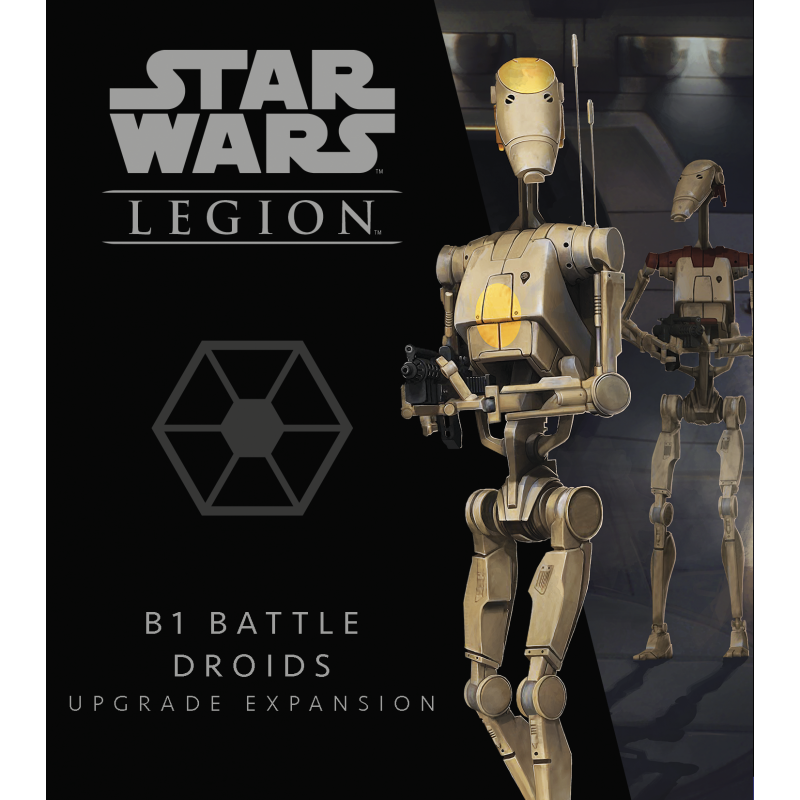
Having picked up a B1 Upgrade Expansion, I had four additional droids. This included two additional heavy weapons (The Radiation Cannon and E5-Sniper), as well as two Personnel Upgrade’s in the form of the OOM-Series Droid and B1-Security Droid. The expansion also came with two spare E5 Blaster Rifle arm sets which I now used on the B1’s from my core sets, in place of the E-5C’s. This gave me a total of 40 Droids that could be fielded in five units.
Two Stage Priming
Before priming the models I took the time to glue two or three small stones to each of the bases. For this I used Superglue and a large set of tweezers. The benefit of doing this before the next stage is that the stones get a decent coat of primer, making them easier to colour later on.

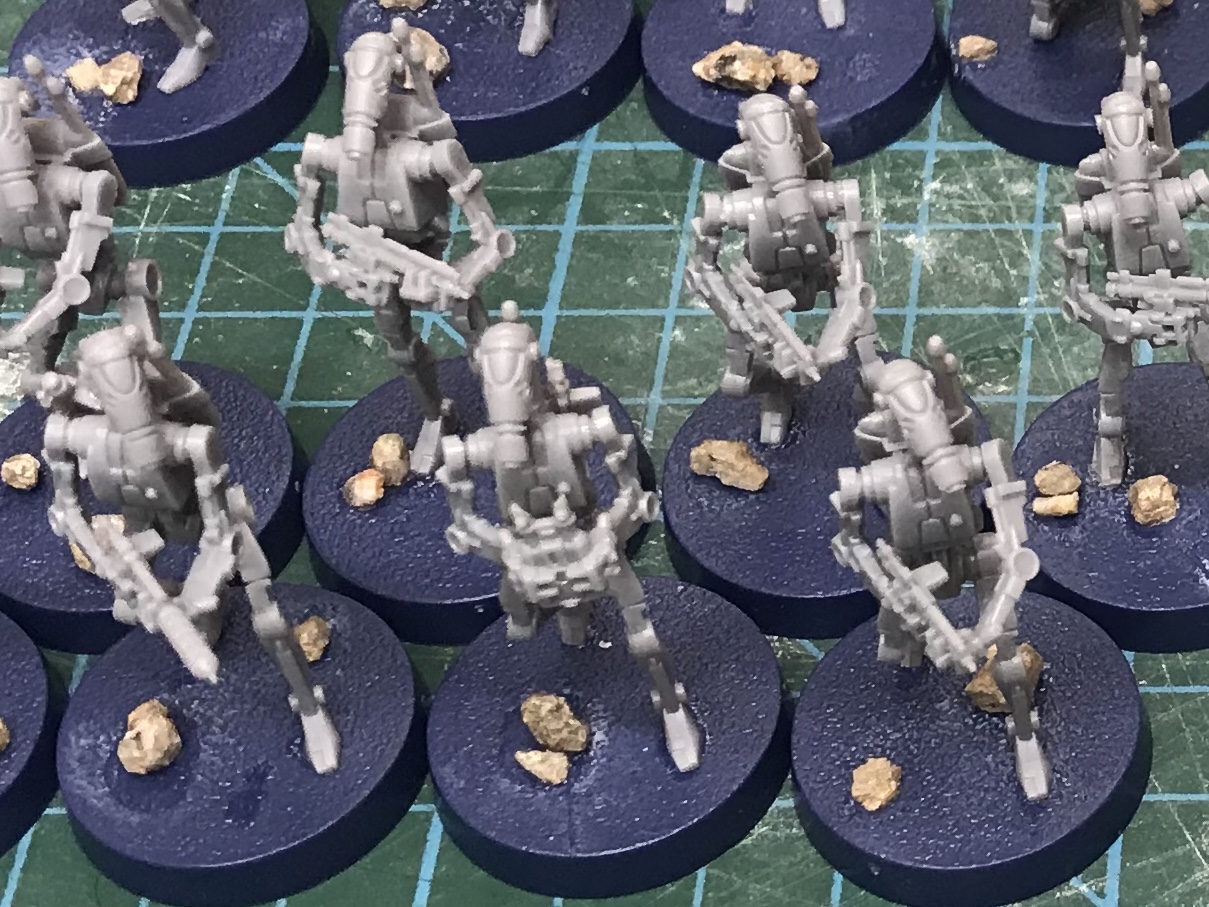
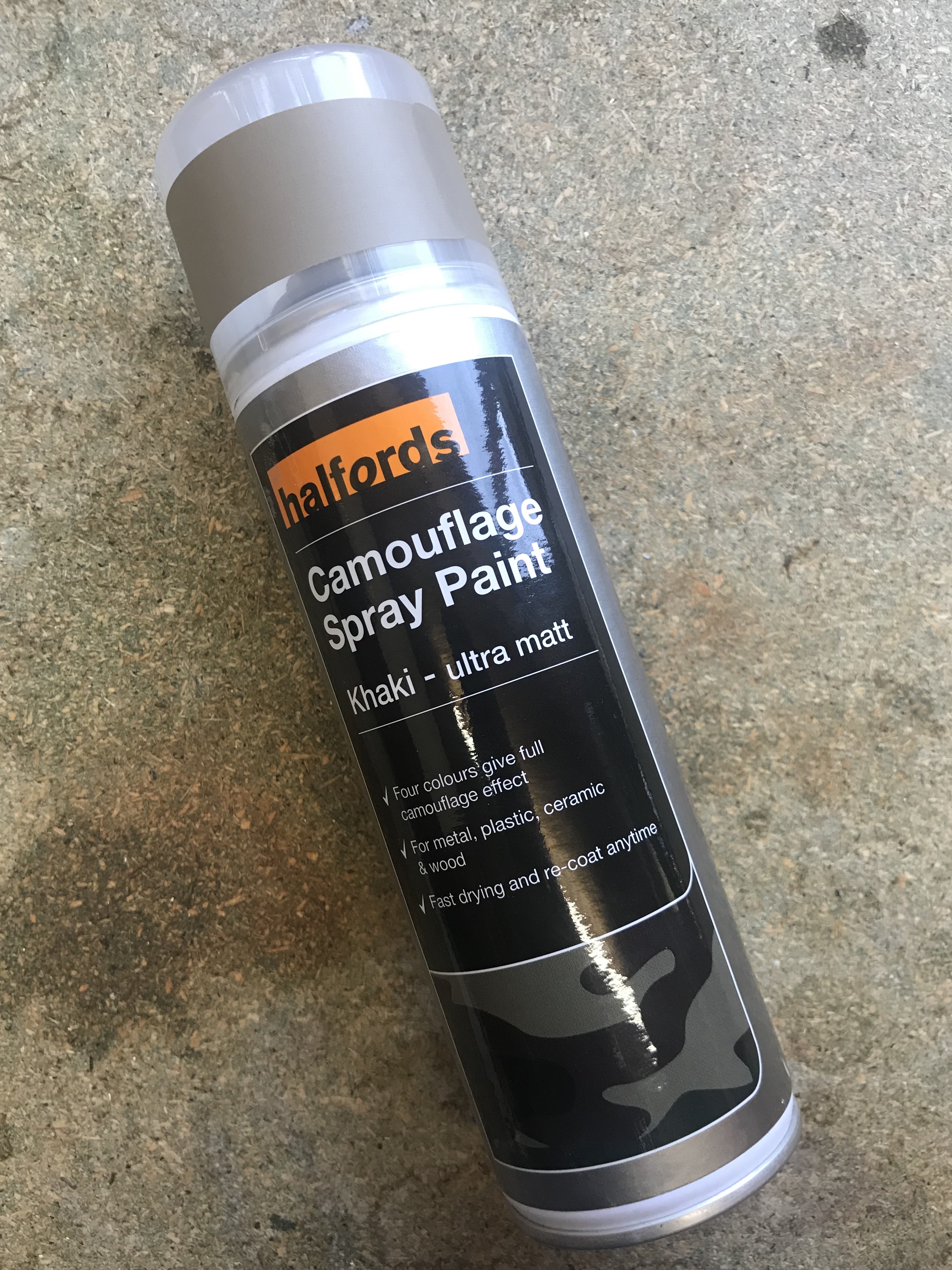
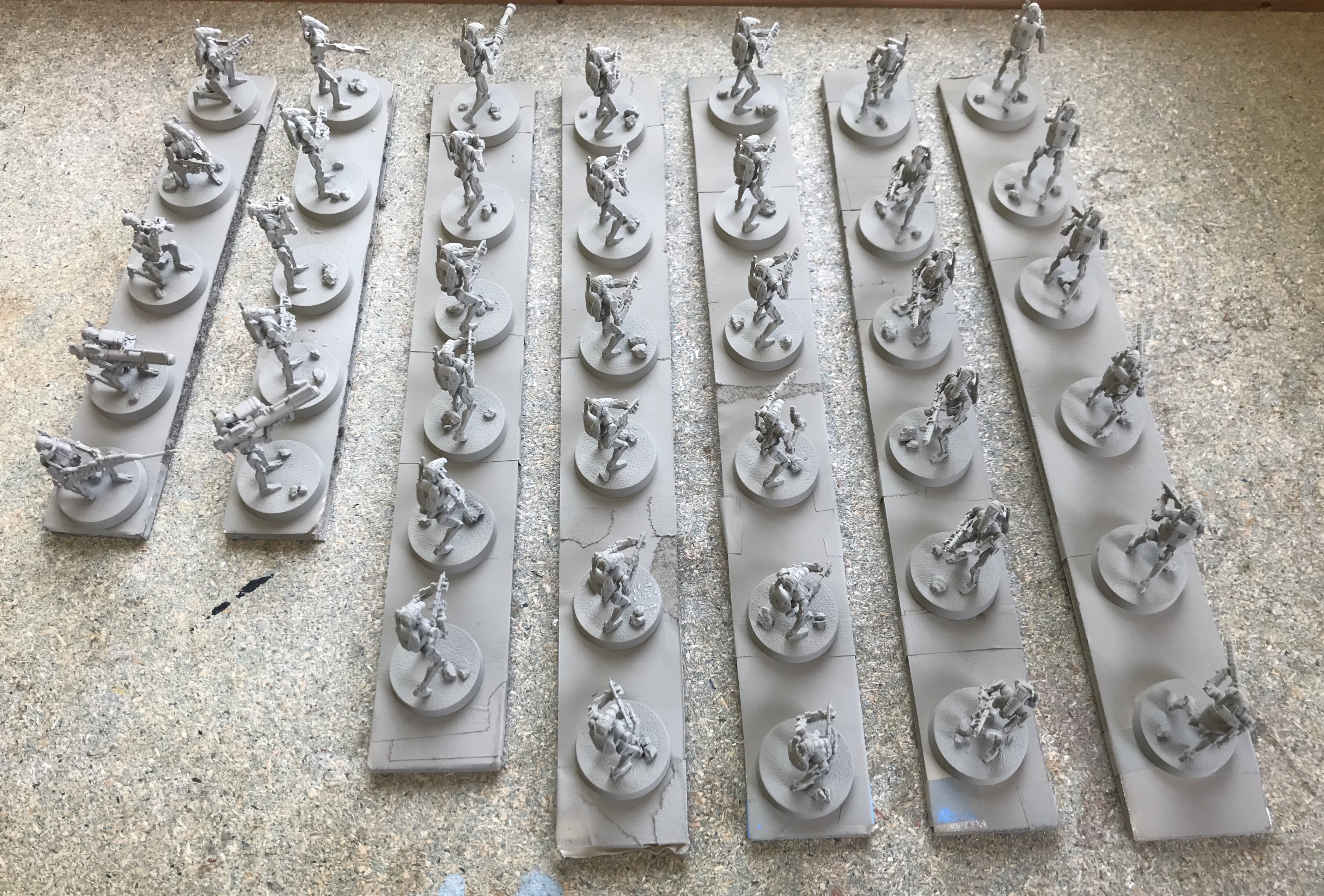
For ease of handeling I fixed the droids to poly board strips using blue tack. I then used my hobby favourite, Halfords Khaki Spray Paint, to prime the droids. Though not marketed as a primer, I find this paint covers well over plastic and gives a mat finish that is perfect for a first coat or base colour.
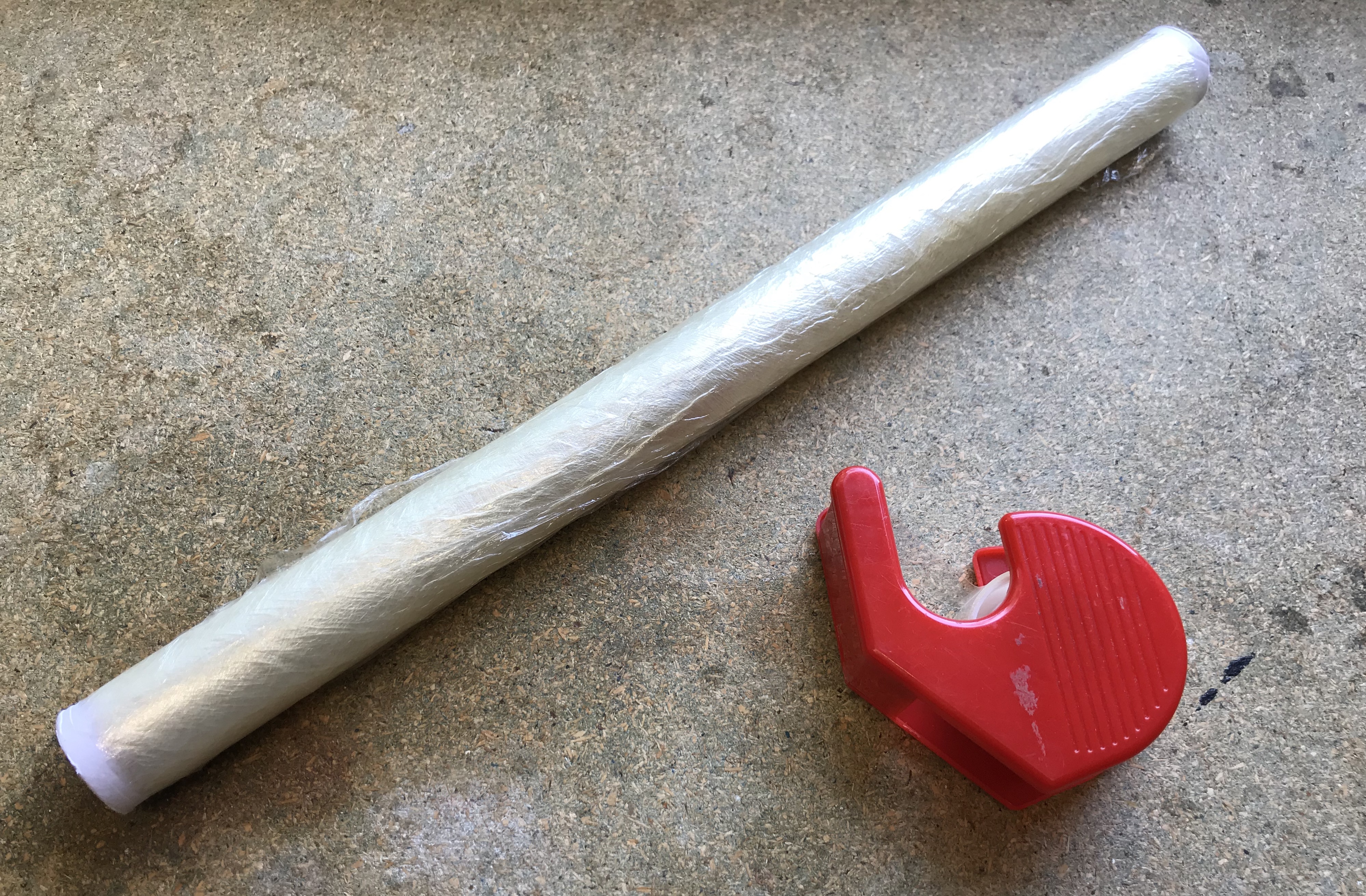
Once the Kaki had fully dried I used cling film and sellotape to wrap the Droid’s bases.
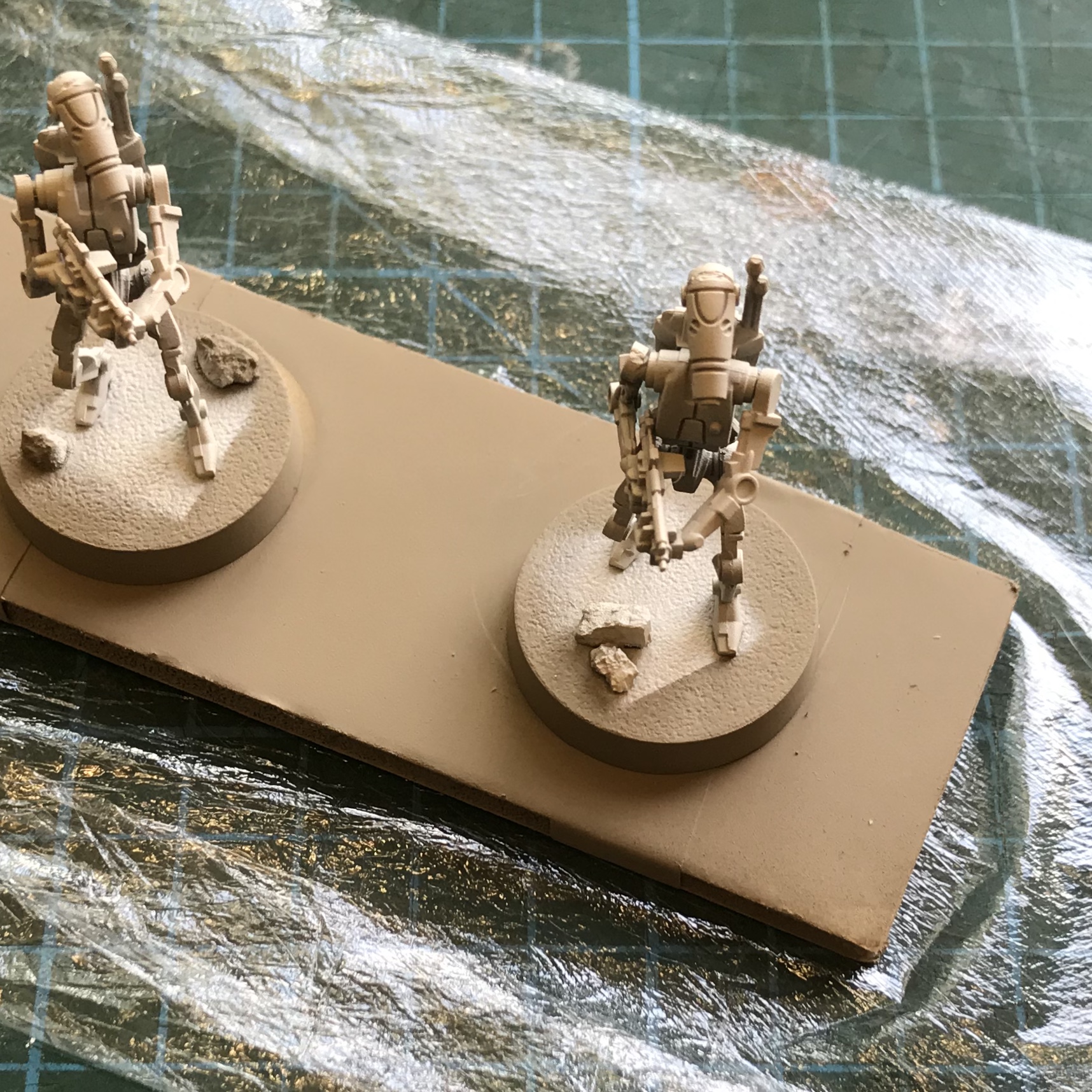
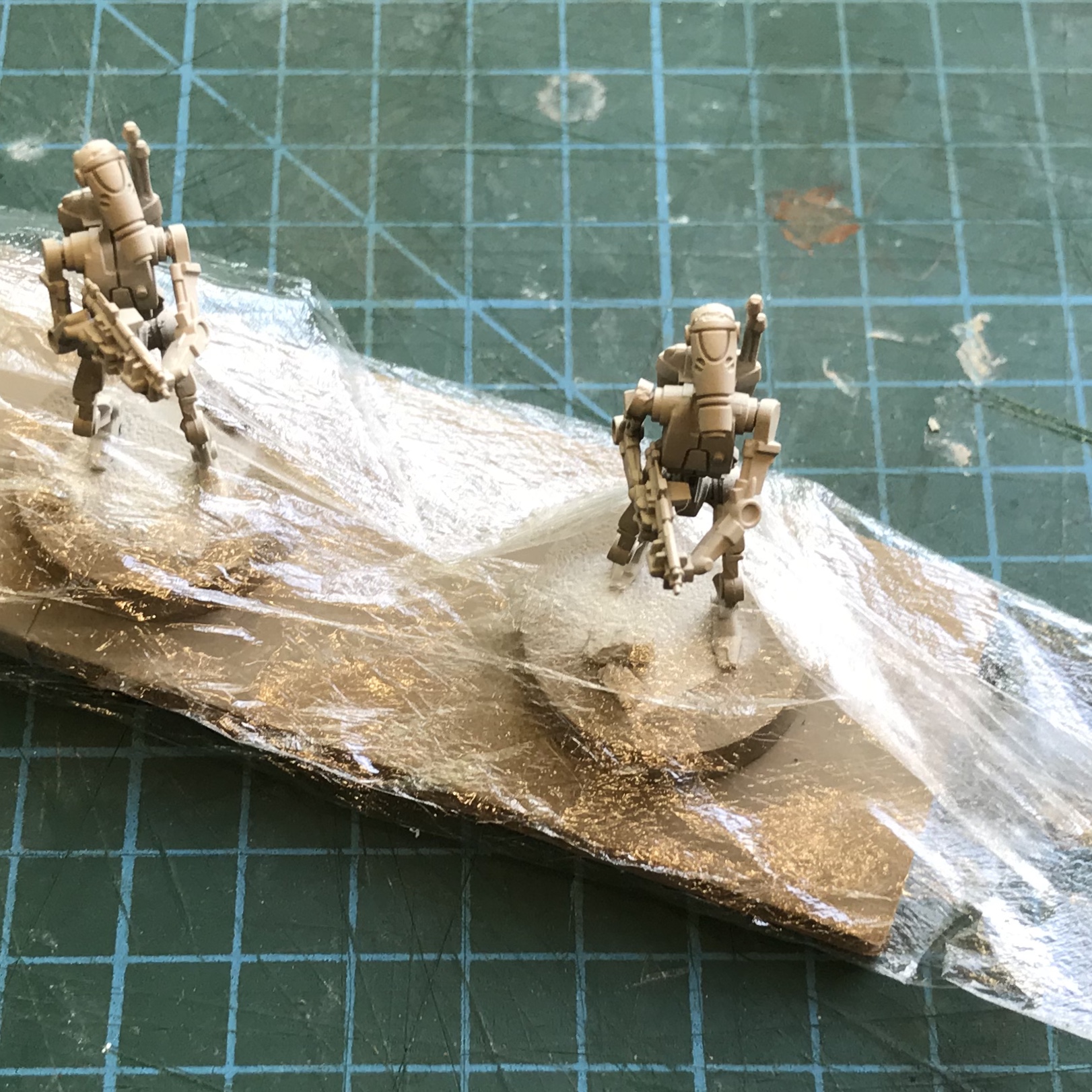
With the bases masked off I sprayed the droids again, this time with GW Wraithbone.
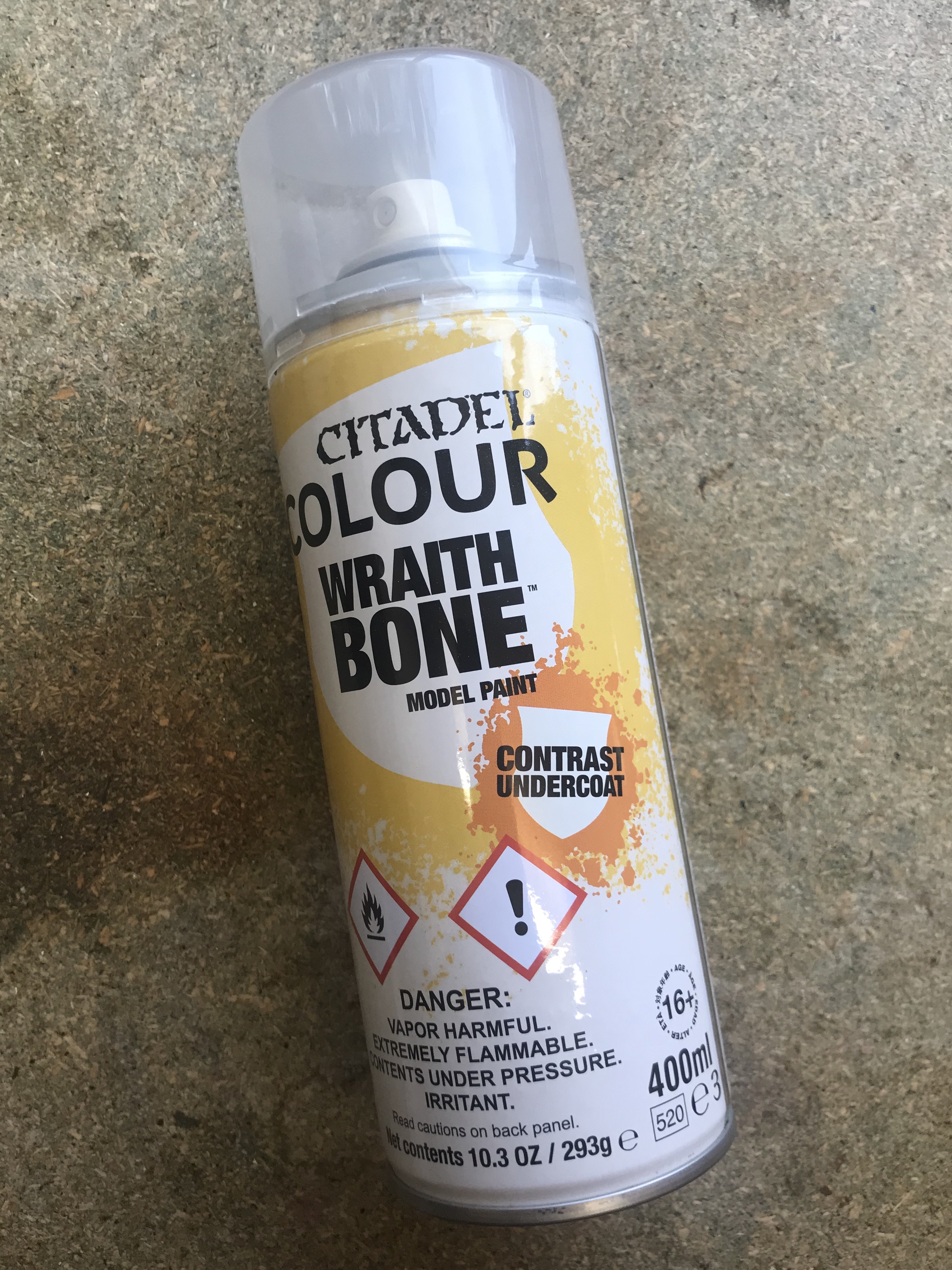
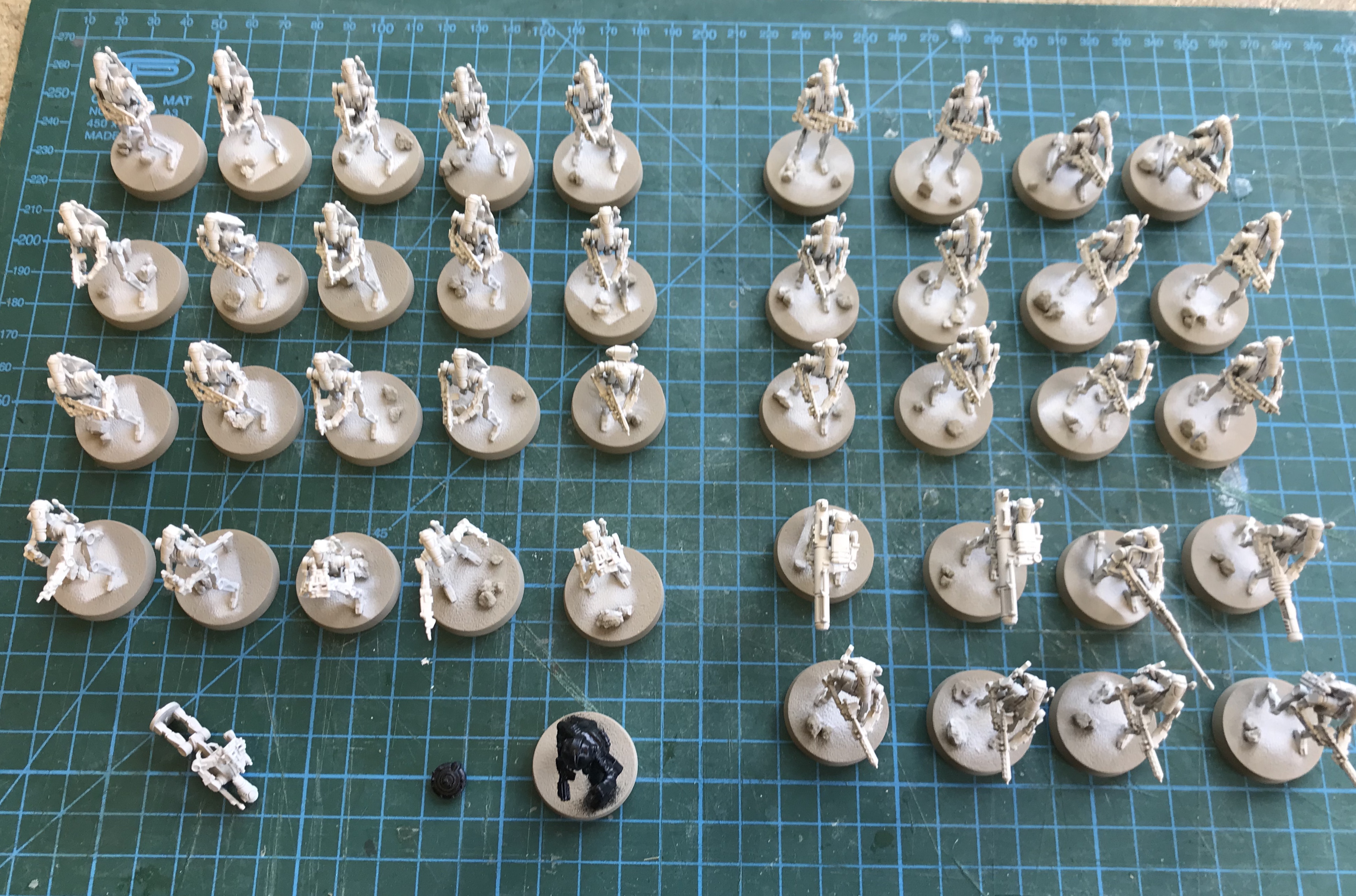
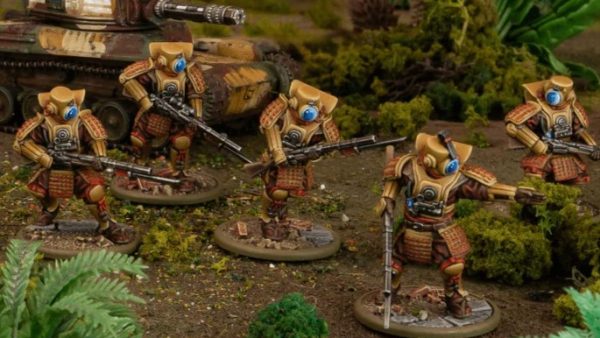
With the cling film mask removed, the bases are left Kaki (matching the rest of my Legion miniatures). The droids, now Wraithbone, we’re starting to look a lot more like their movie counterparts. I go through this process of masking with most of my legion miniatures as I find it preferable to painting bases (The keen eyed among you will spot an AAT Droid Commander and an Imperial Operative within the ranks of the B1’s).
Contrast
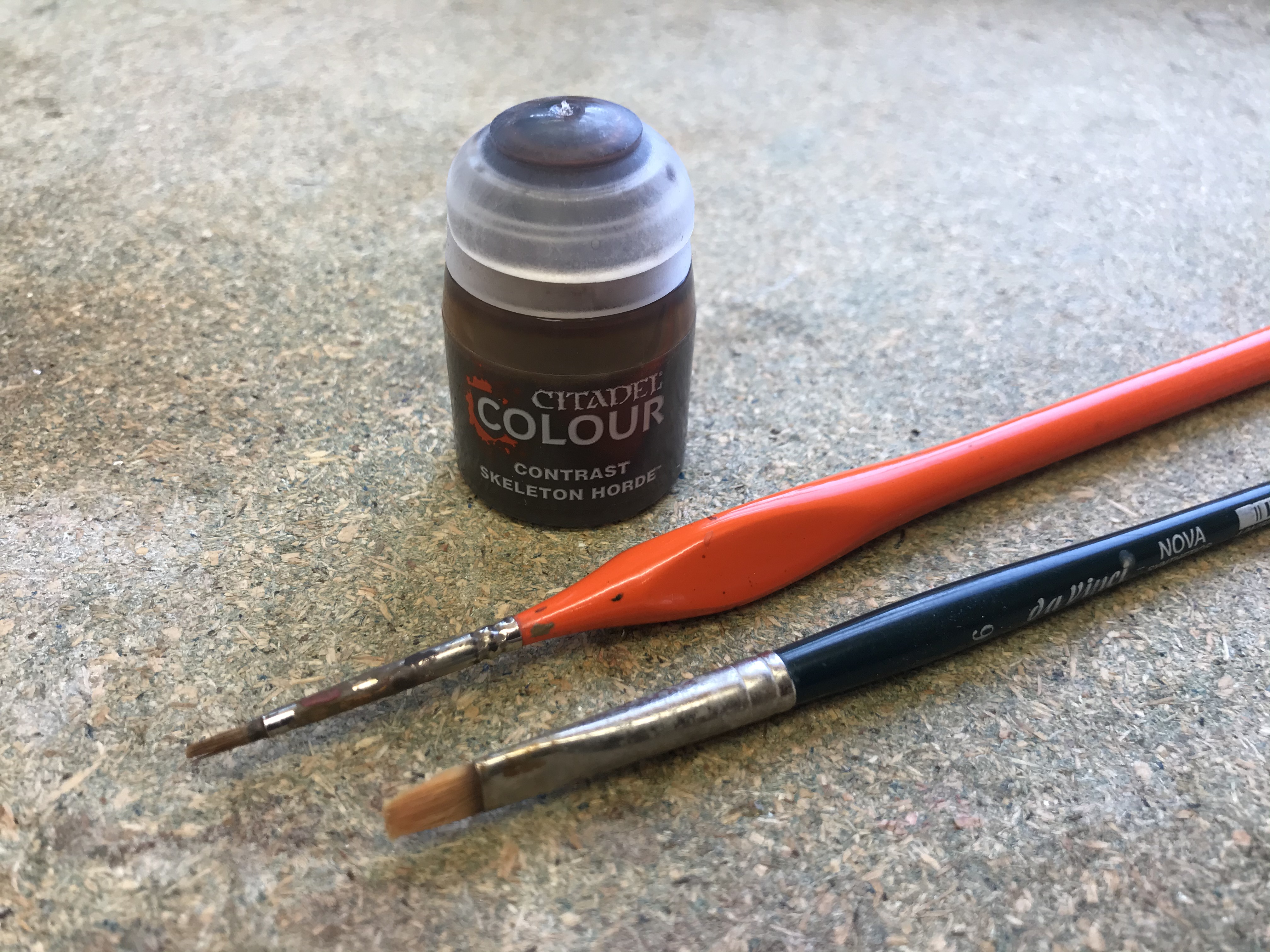
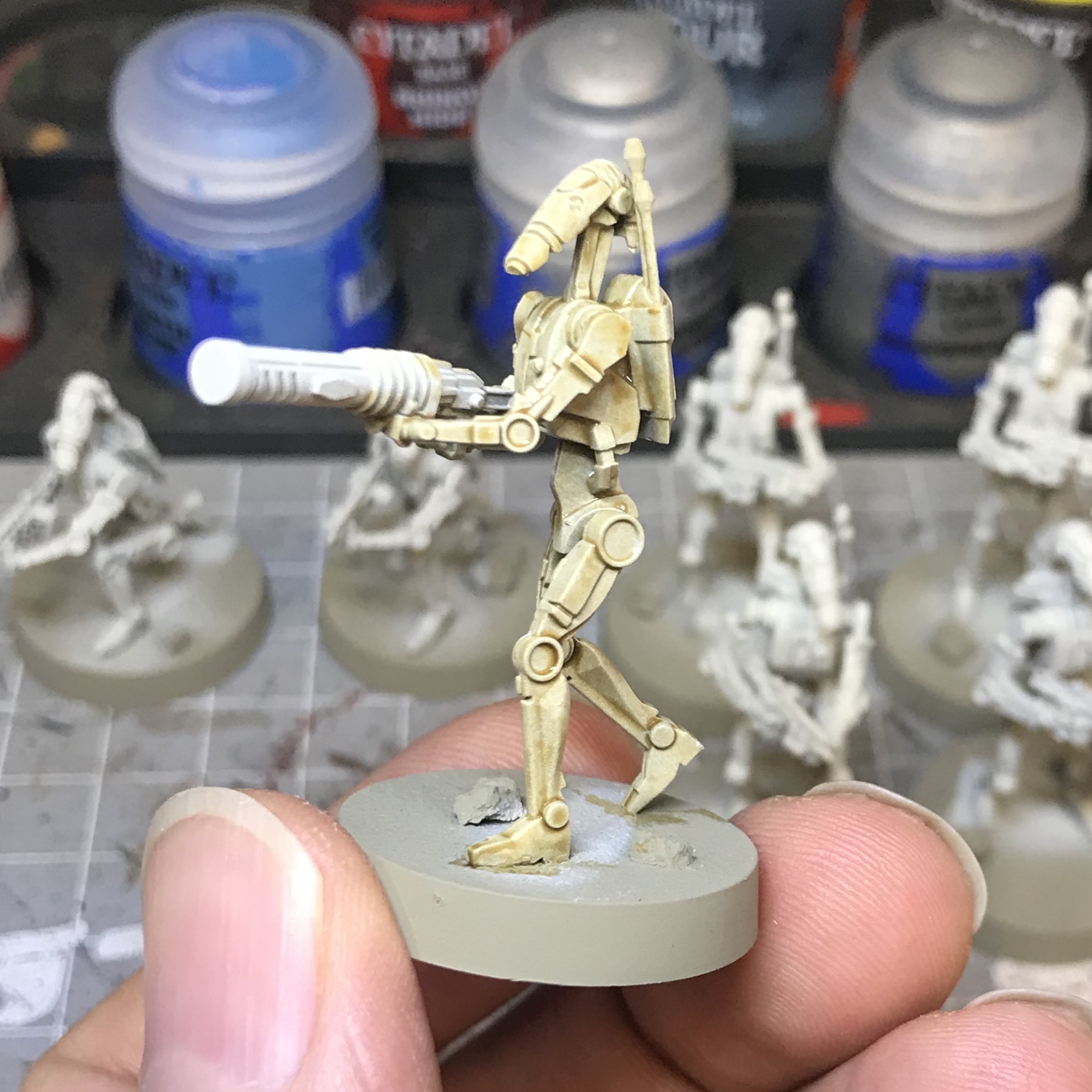
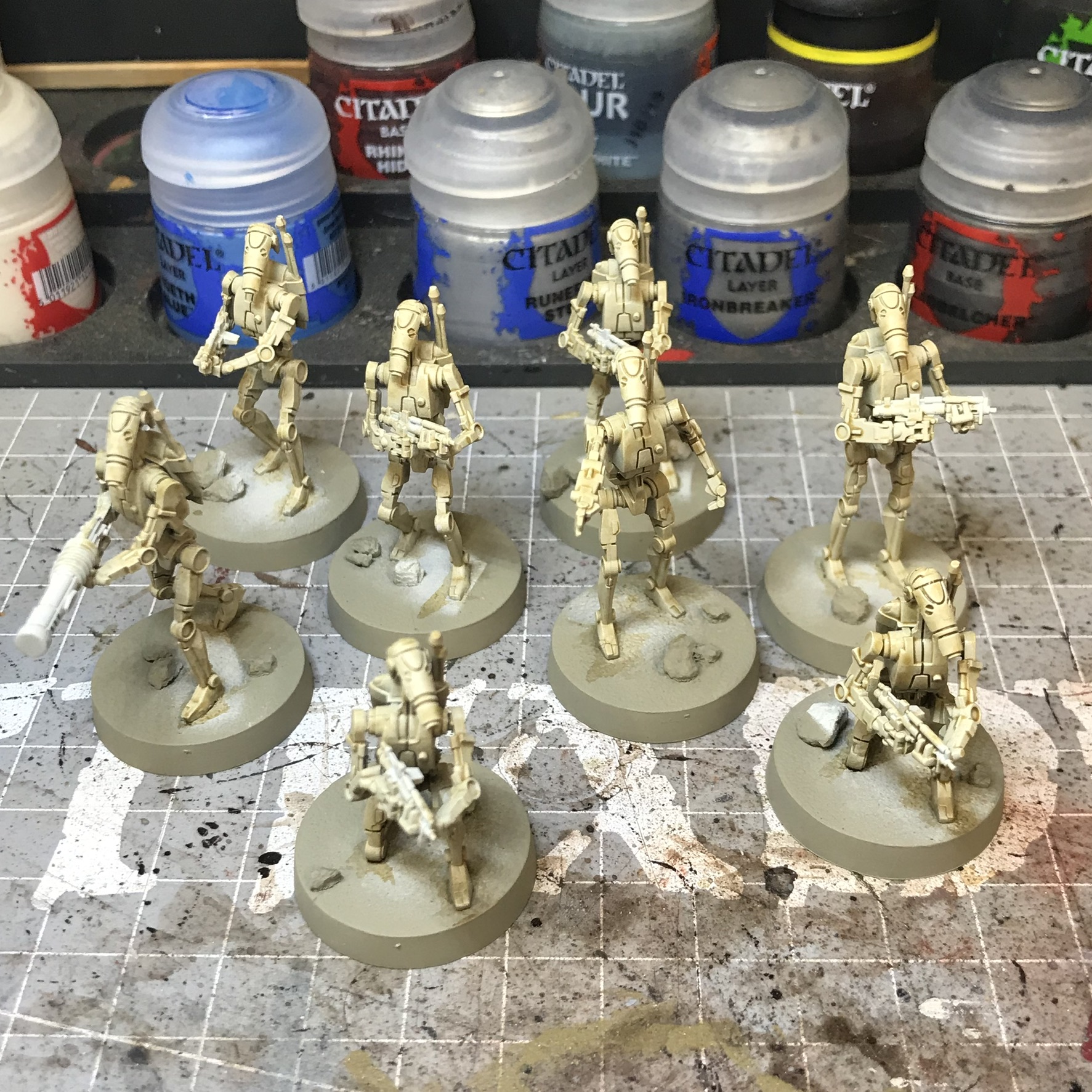
The first step was to work over the Wraithbone primer with Skeleton Hoard Contrast Paint. For this I selected a couple of older brushes. I found a larger, flat tipped brush was the quickest way to get the paint over the model. When necessary I used the smaller brush for the hard to reach places, mainly under and around the arms.
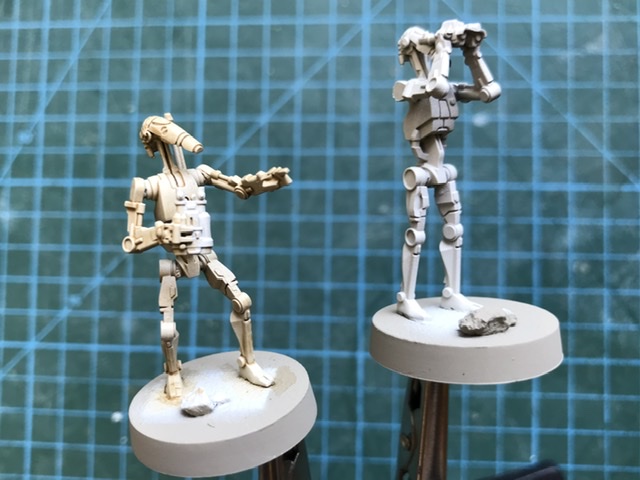
With this single step the droids became shaded and brought to something very close to their final colour. In this image you can see before and after the contrast.
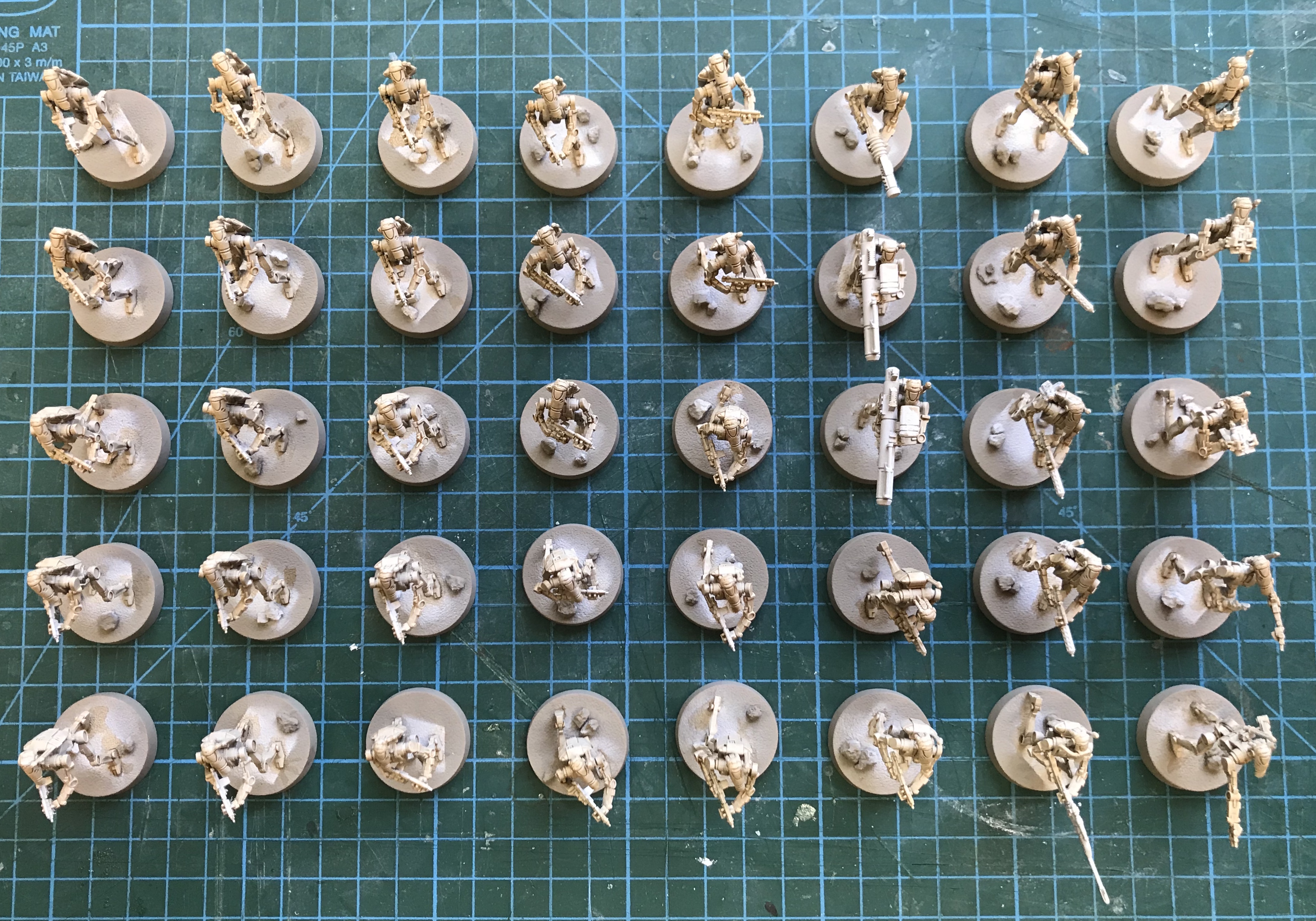
I worked through the droids in batches of eight, taking 30-40 minutes per batch.
Bases - Sand and Stone
As I would be matching the bases of the B1’s to the rest of my Legion collection, I already new which paints to use. However as I have been using a sand/pale earth effect, I was a little concerned about how the B1’s tan colour scheme would work. For this reason I decided to tackle the bases next, in case it lead to my making changes to the colour scheme I had in mind.
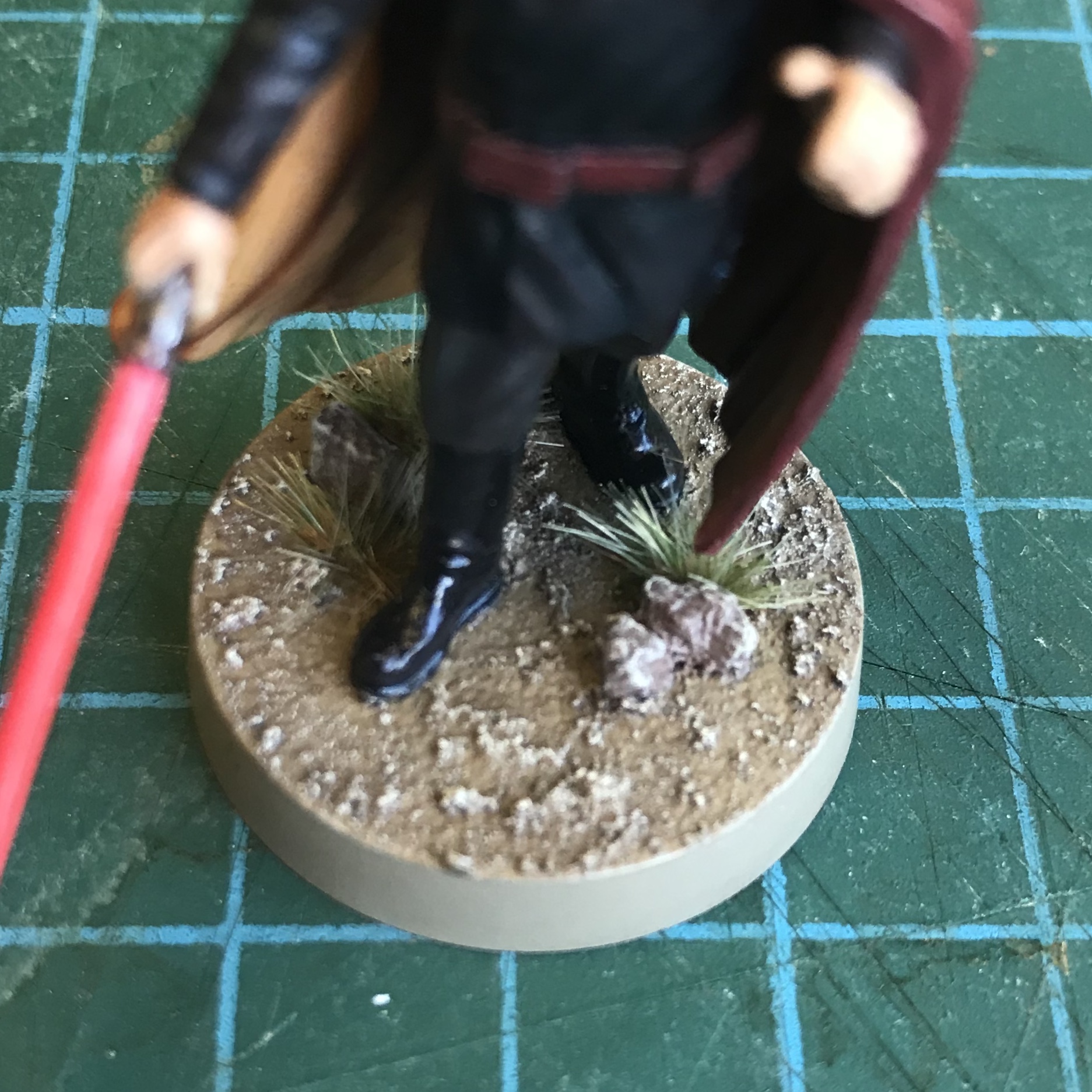
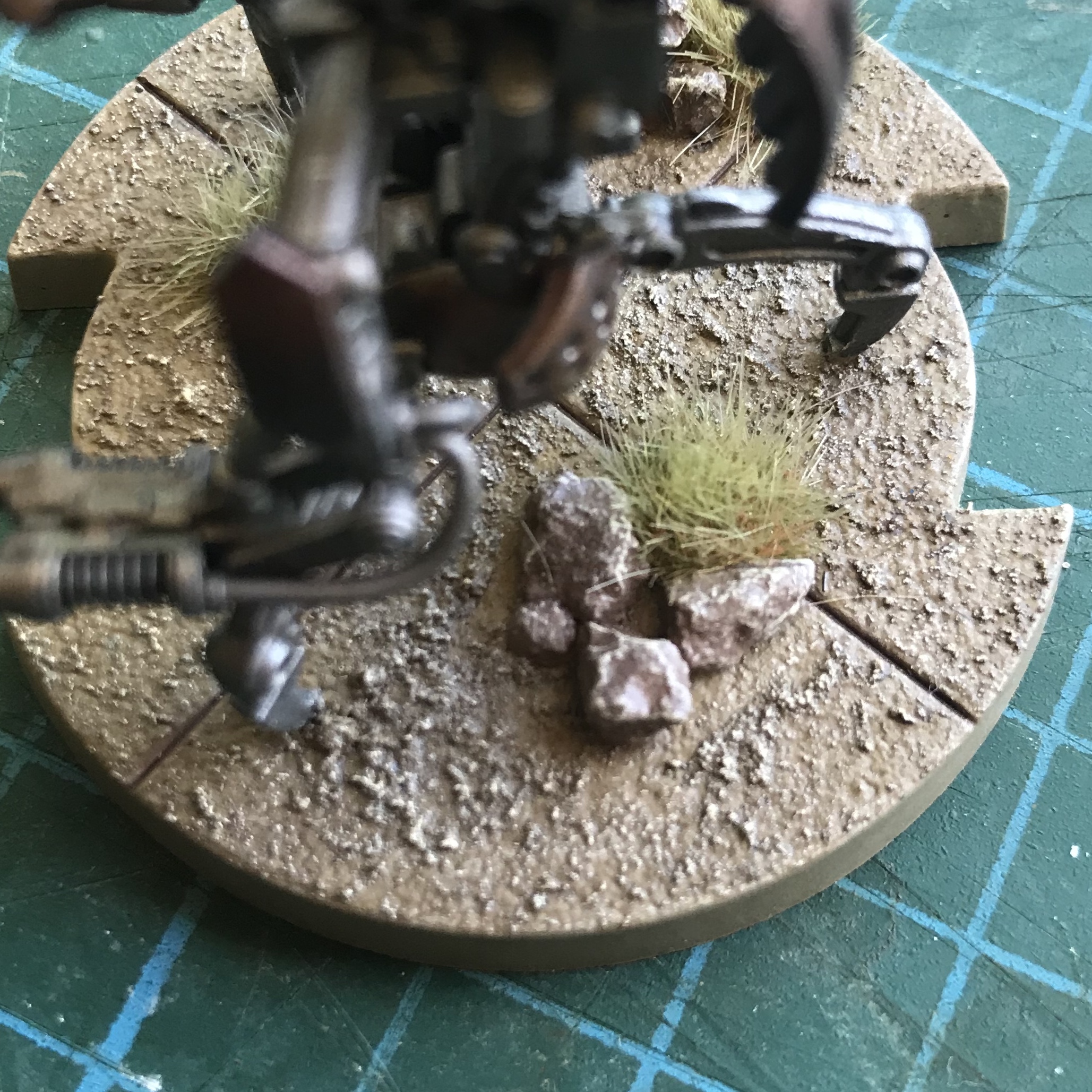
These are some examples of bases that I have already completed for this force. It is predominantly Armageddon Dust with an Agrax wash and a screaming skull dry brush. The first step is to colour the rocks. For that I use Vallejo German Camo Pale Brown and a decent sized old brush.
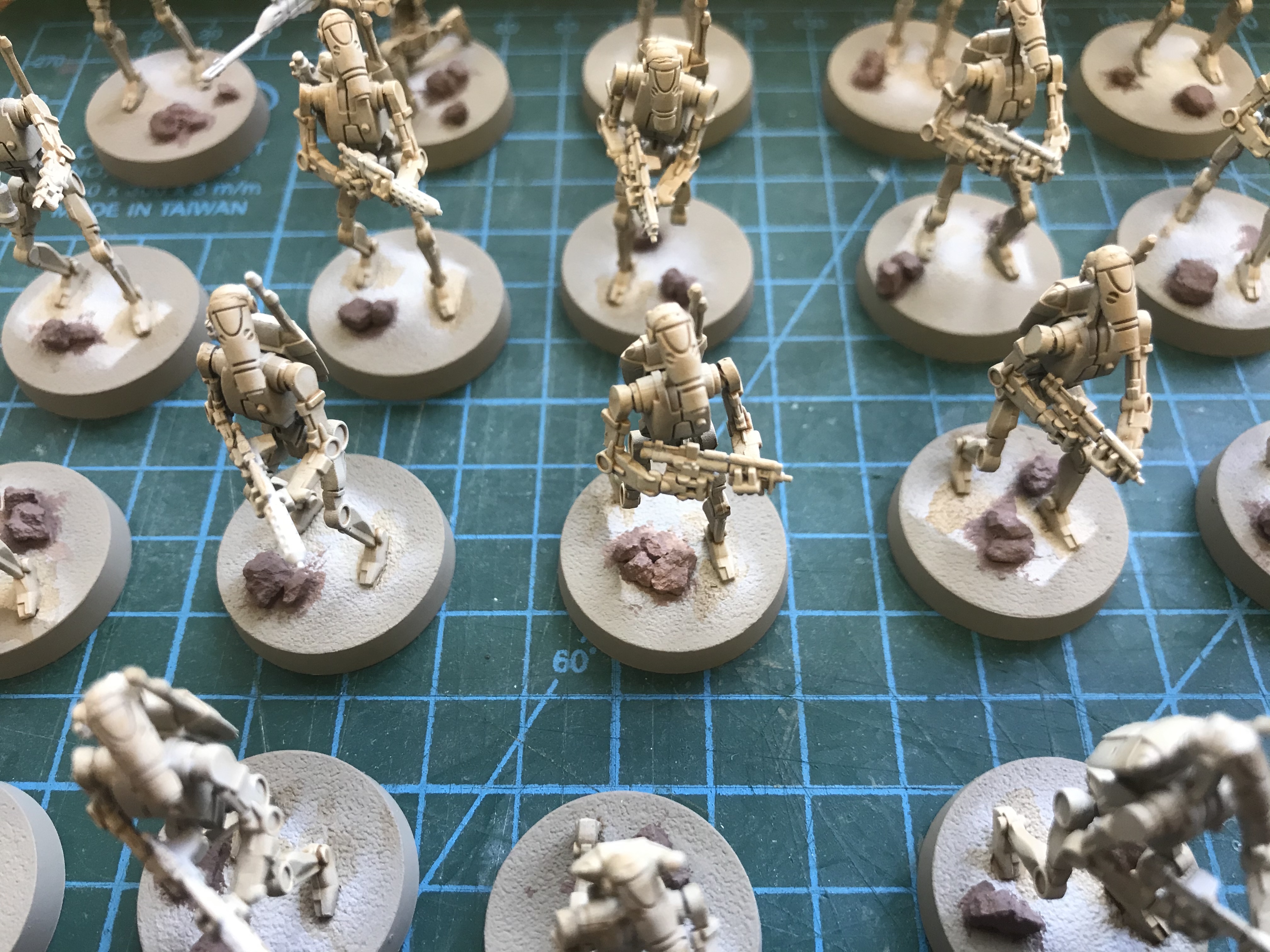
This was a very quick step and I had the rocks on all 40 bases painted in about half an hour.
Next up was the Armageddon Dust. This paint requires a good shake at the very least. I tend to use a coffee stirrer to give it a proper mix and ladle a decent sized blob onto my palette. I use an old brush for this as the bristles take a bit of abuse from the fine grains in the paint.
This is a slightly slower step as you need to avoid painting over the feet and rocks or the edges of the base. Once again I worked in batches of eight and found it took around 25-30 minutes to do eight bases. As the first set began to dry I felt relieved to see that the base colour wasn’t going to be too similar to the droid standing on it!
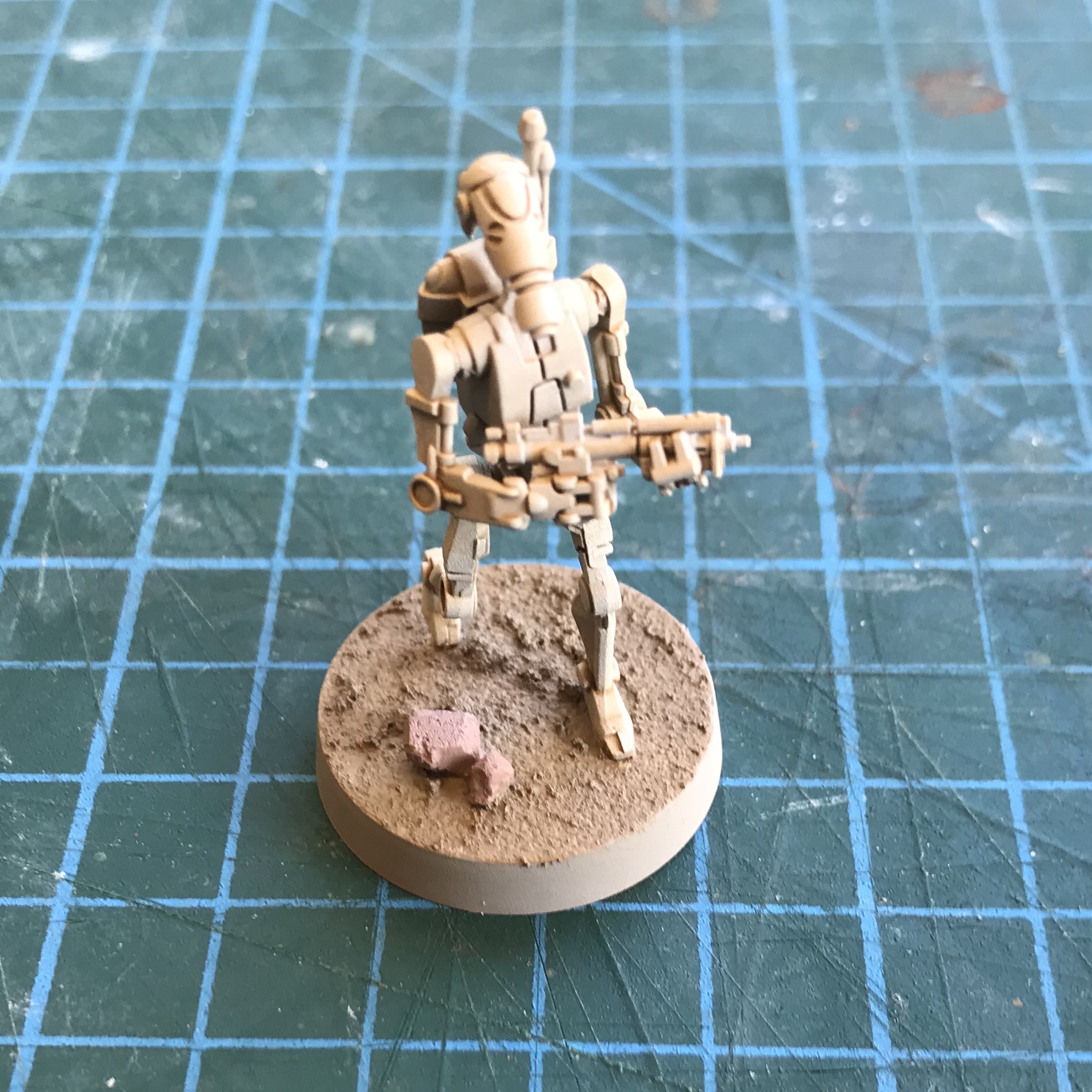
I spread this task over a couple of evenings. Once all 40 bases were done I left them to dry overnight.
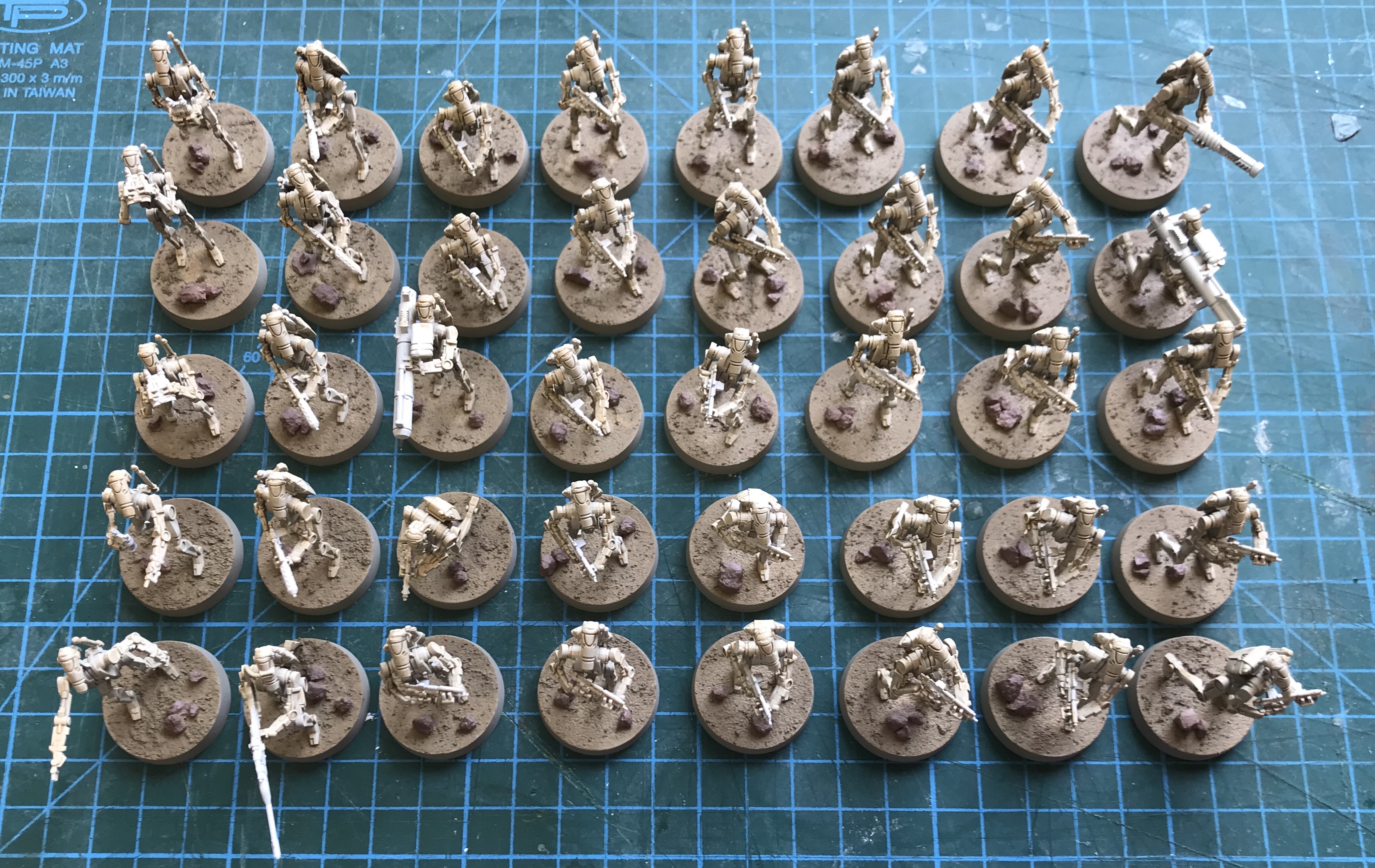
Bases - Wash and Drybrush
Once all the bases were dry I moved to the Agrax wash. For this stage I used some wash medium, mixing approx 2:1:1 wash, medium and water. This helps the wash flow, making it easier to apply and also reduces the amount of pigment. I didn’t want the sand to become too dark and muddy looking.
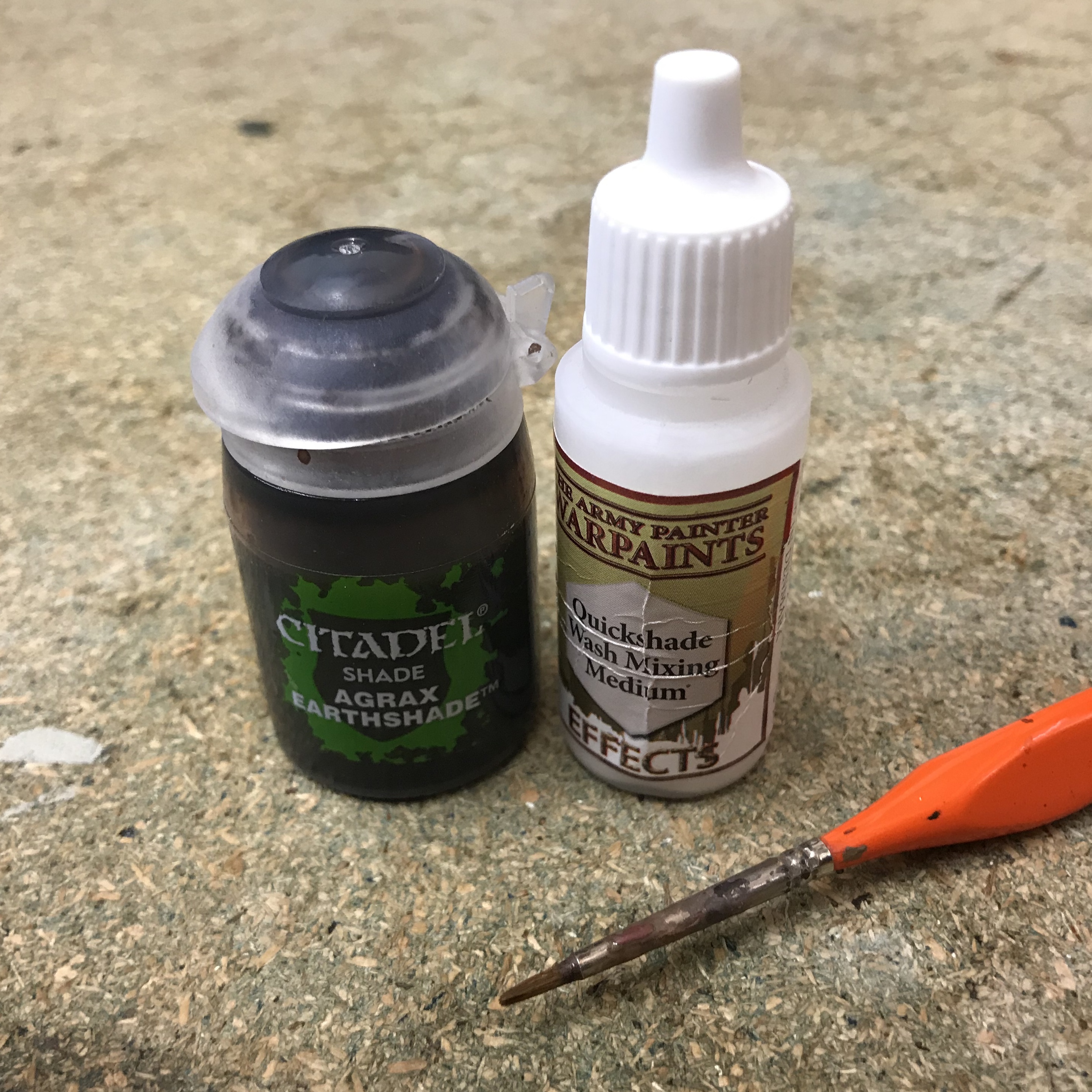
Using a slightly larger, but fairly old brush I covered the sand and rocks, being careful to avoid going over the edge of the base. I worked through all 40 bases in around 45 mins. This step took the colour of the sand even further from the beige of the droids, helping them stand out from the bases.
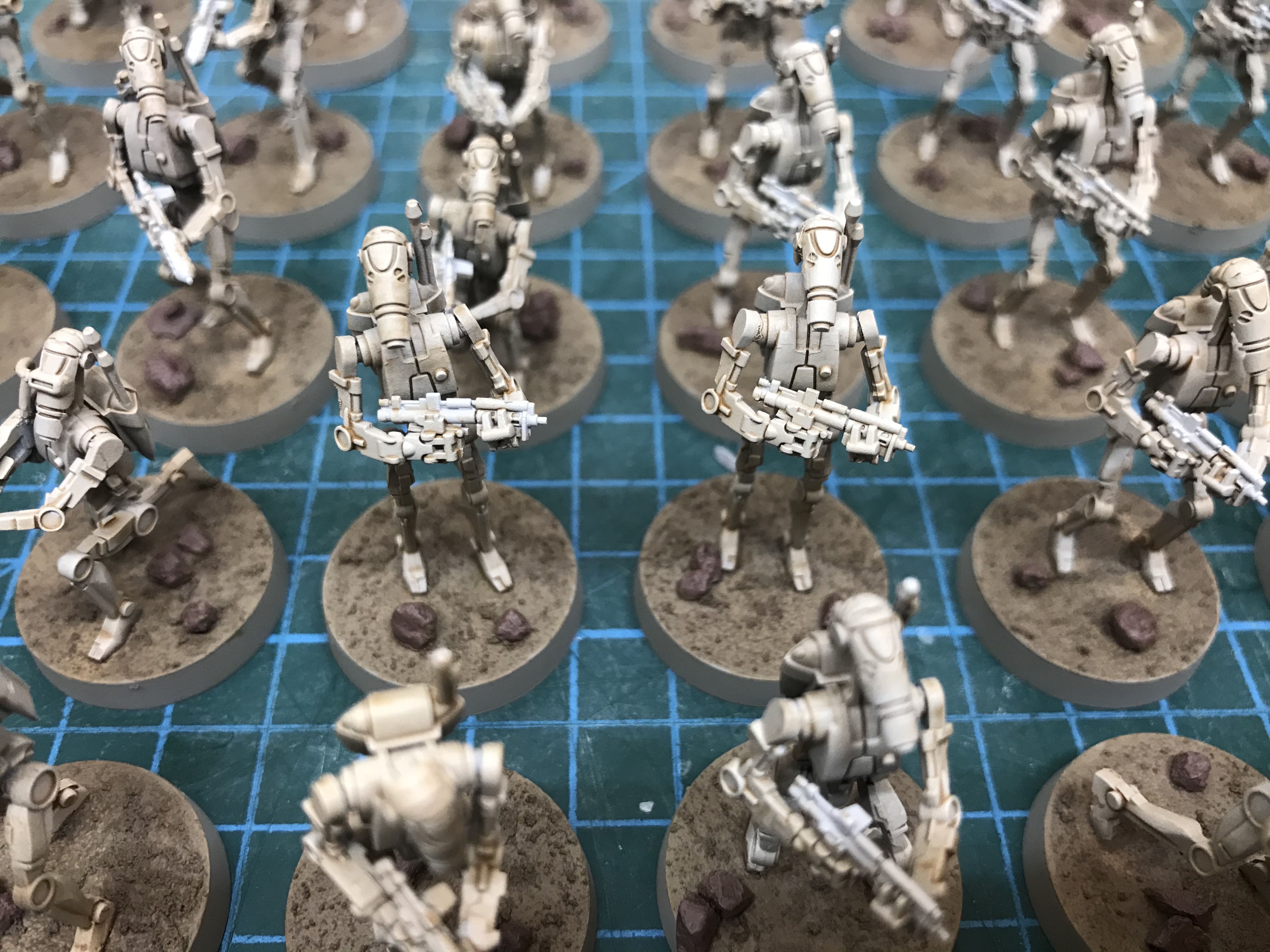
The final step of painting the bases was to apply a screaming skull dry brush. This brought back the texture and helped to create a dry, sandy/earthy look.
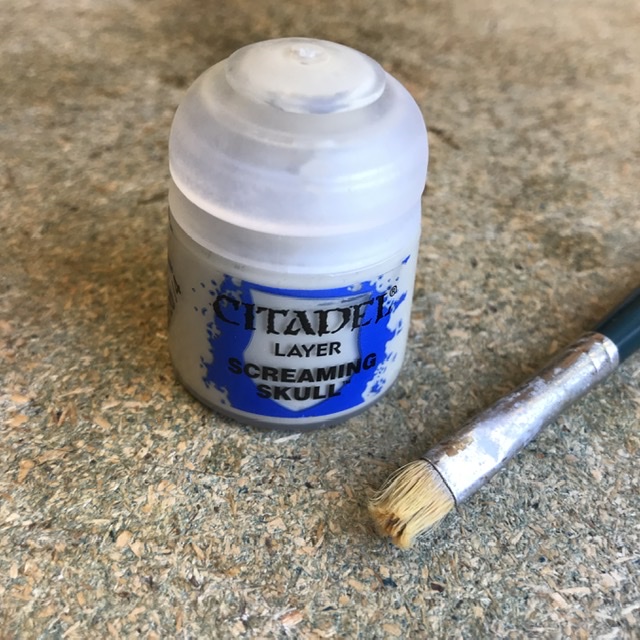
My approach to dry brushing has always been less is more. I prefer to use a light dry brush, going over an area two or three times if necessary. This is preferable to putting too much paint down on the first coat and creating a clumpy effect. I used a large flat brush to cover the bases as quickly and evenly as I could. All in all this step took me about an hour and a quarter to complete.
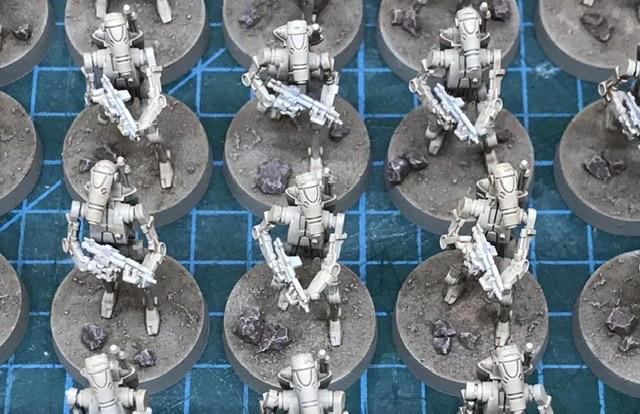
With the bases done I was feeling much happier with the droids colour scheme. They were looking pretty near table ready but I still needed to tackle the weapons.

Rapid Reinforcements
At this point in the project I received a delivery in the post…
As I already had droids on my painting table it made sense to get the two B1 pilots painted along with their foot slogging counterparts. I built the STAP chassis first as I would need them to position the pilots.
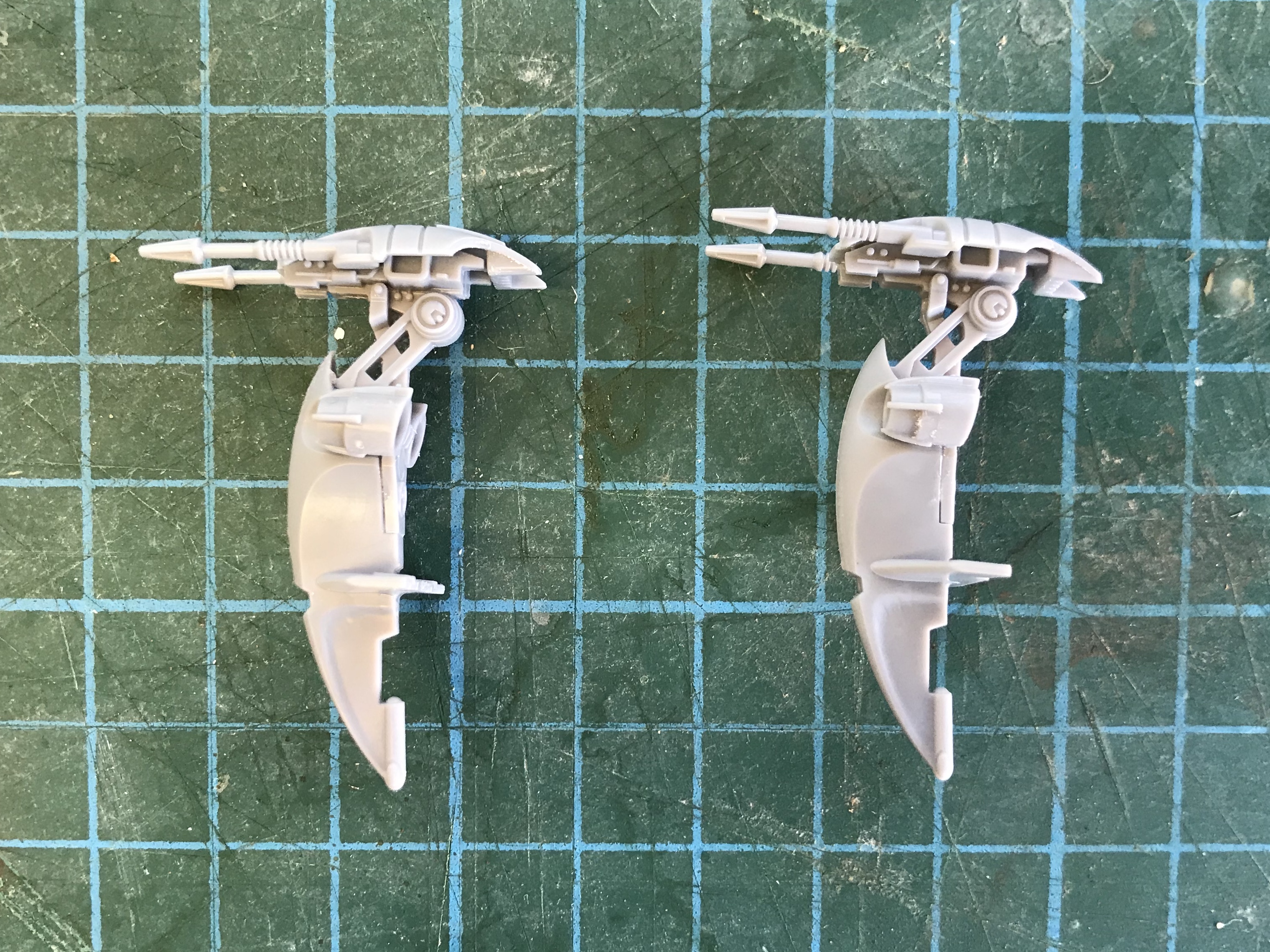
With no small amount of patience (not to mention a pair of tweezers and a blob of blue tack), I managed to assemble the droids in the desired position, without permanently attaching them to the chassis.
I also kept the bases separate. This made priming easy as I only had to cover the acrylic flight stand with some cling film.
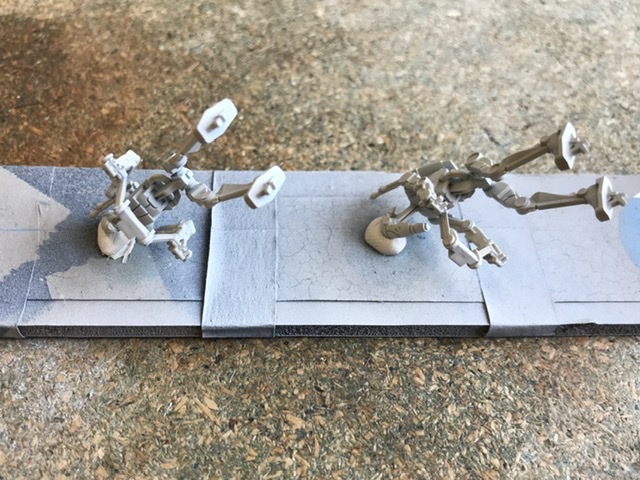
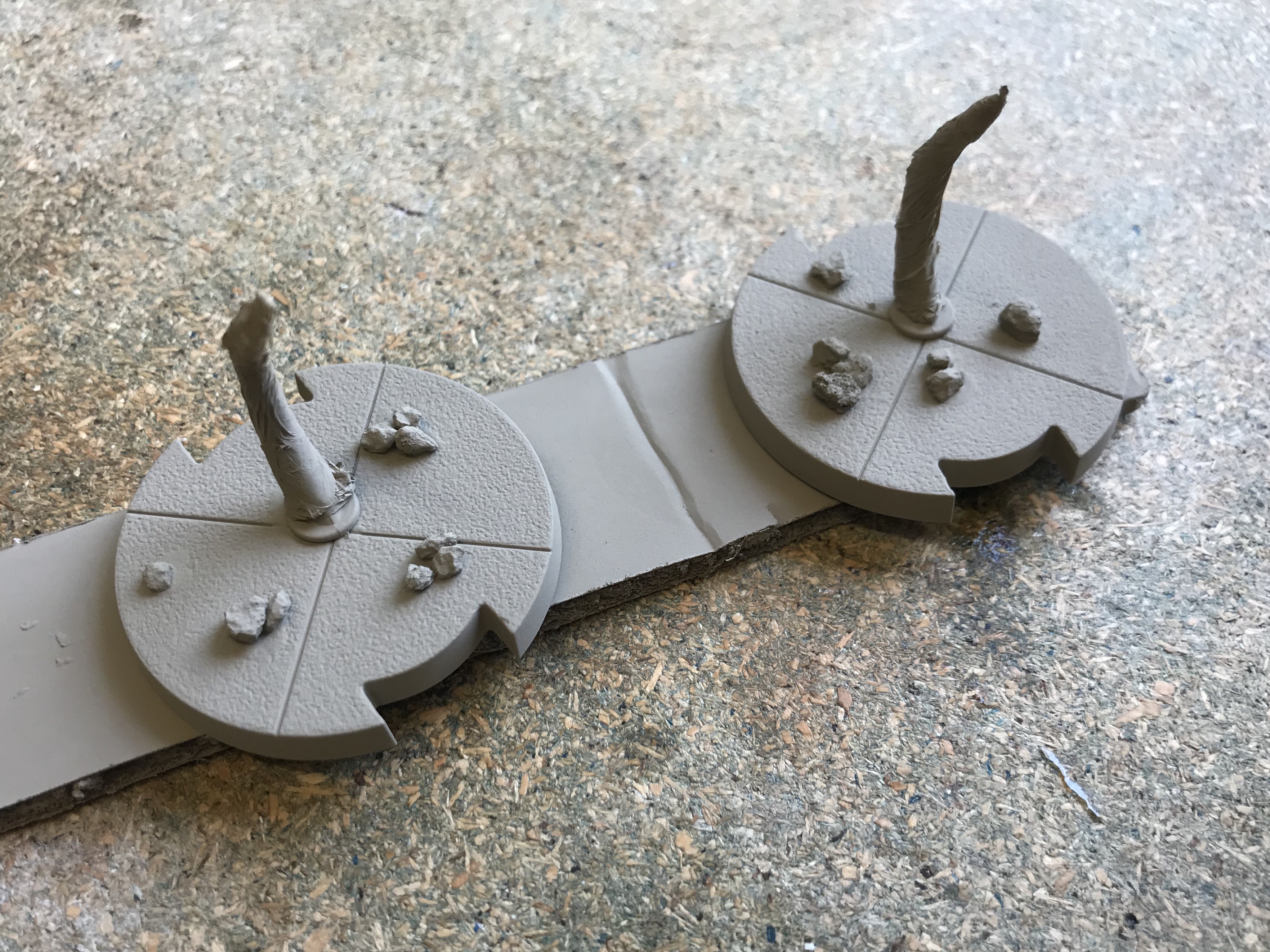
With a coat of Wraithbone and a lick of Skeleton Hoard, the pilots were swiftly brought up to the level of the other B1’s. As I had gone to the trouble of priming the bases, I textured and painted them as well.

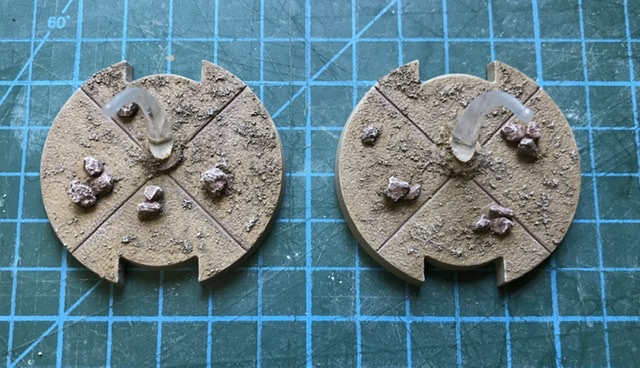
Edit: Don’t stick your flight stands to your bases before priming! As they are clear acrylic, you will end up seeing the uncoloured base where the stand touches down. I had to crack mine off, paint in the uncoloured section and re glue them! Total waste of time as I could’ve just sprayed them before glueing!
Blasters!
I had originally planned to paint the droid weapons in grey and give them a black ink wash. However, as I had started using contrast paints, I figured there may be an easier solution. I hadn’t tried the Contrast Black Templar before, but it seemed to be one of the more popular colours, so I figured it was worth a go.
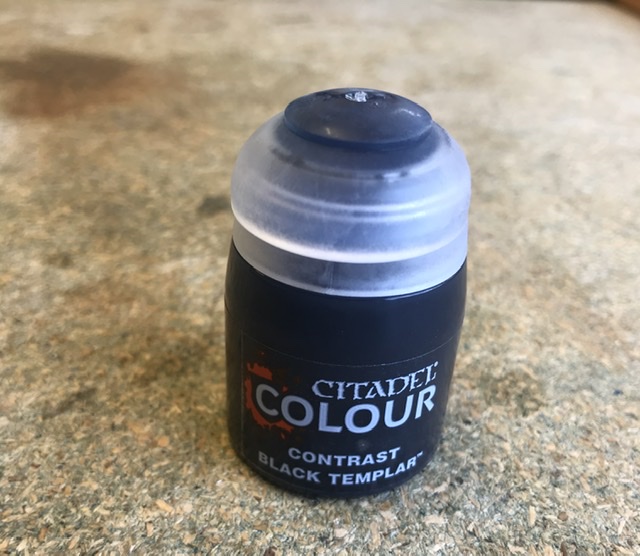

My initial thought was that I would need to go back over the droids guns with Wraithbone (from a pot), to touch in any areas that had been hit with the Skeleton Hoard. Instead I did a test on one of the B1’s and found the Black Templar went straight over the Primer and Skeleton Hoard no problem!
This would save me a lot of time as I now only needed to go over each of the blasters with a single colour.
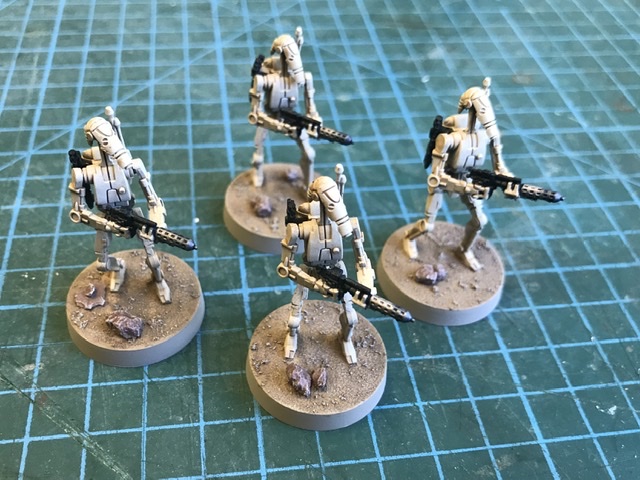
Once I had worked through the E-5’s I moved to the heavy weapons. I gave the E-5C’s silver barrels to help them stand out from the standard rifles. For this I used Iron Breaker washed with nuln oil and a little Drakenhorf Nightshade at the tip.
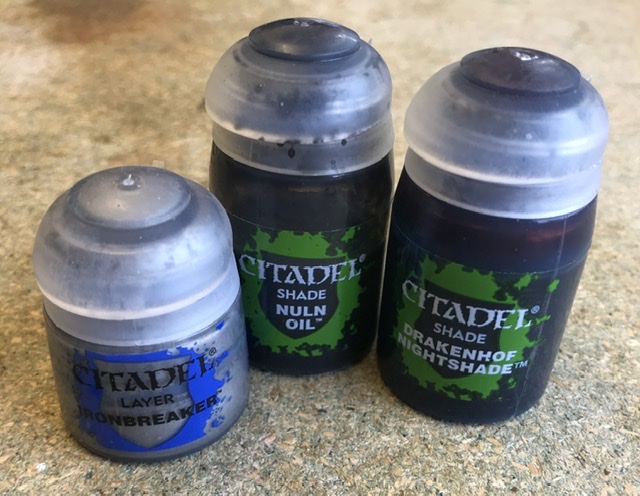
The E-60R’s were initially given a coat of Black Templar but as they are quite large and smooth, the effect wasn’t as dark as the other weapons. I decided to give them a Nuln Oil wash as well, to even them out.
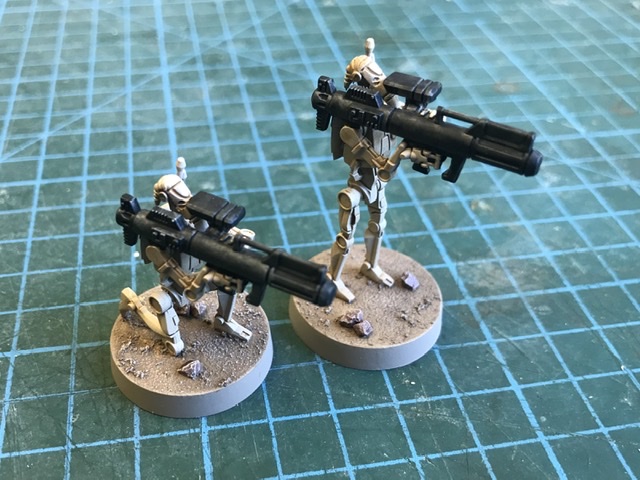
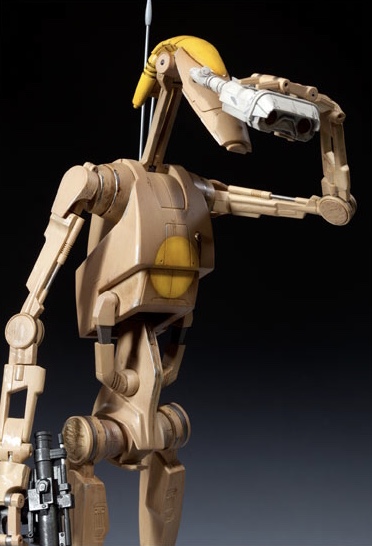
After checking a few reference images I noted that the Binoculars carried by the unit leaders should be ivory or white. This would help the unit leaders stand out from the basic troops. Sticking with the contrasts method I had already employed, I used Apothecary White. As this is a much lighter contrast paint, I did take the time to tidy up the paintwork with Wraithbone to ensure a clean finish.
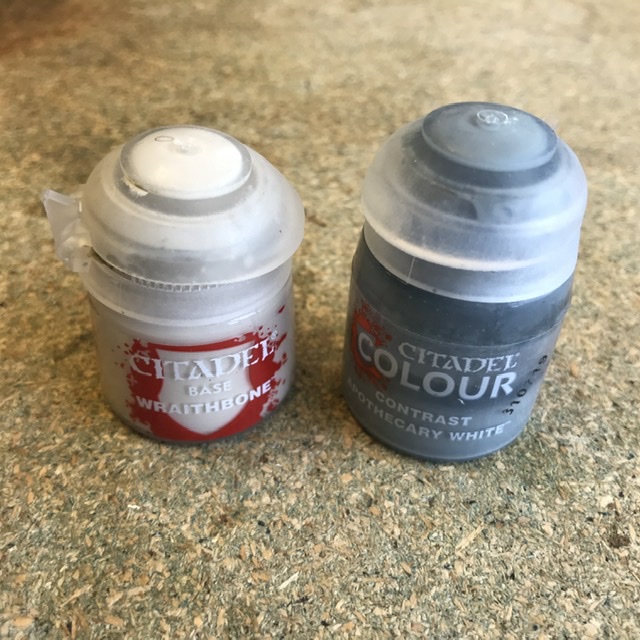

As I had anticipated, this was the longest stage of the process so far. I had definitely saved a lot of time by using the Contrast BlackTemplar, but working around the guns, particularly on the inside where they come close to the body, took a few hours. I spread this task over a weekend and spent a good 4-5 hours in total.
Now the guns were painted I had colour on every part of the model. Next I would add unit markings.

Squad Markings
Now the bulk of the colouring was done I needed to add some squad markings to identify the different units on the battlefield.
My initial idea was to use a different colour for each unit. I didn’t want to spend too long painting freehand markings so decided to just use the shoulder sections of each droid.
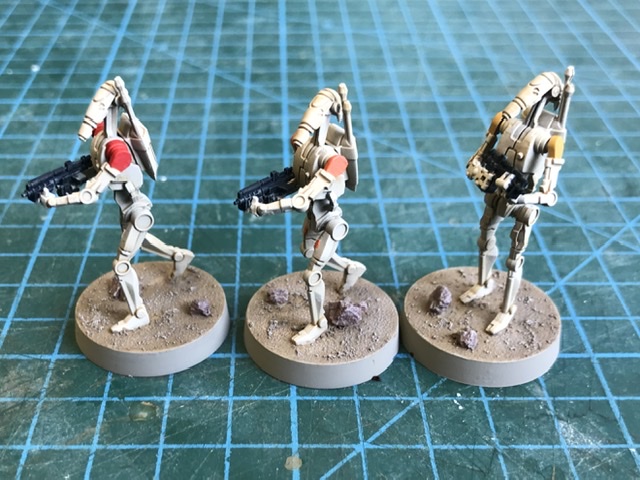
I tried a few of the unit colours I had chosen on some of the droids but pretty quickly decided I wasn’t happy with the results. The round circles of primary colours made them look like a packet of smarties!
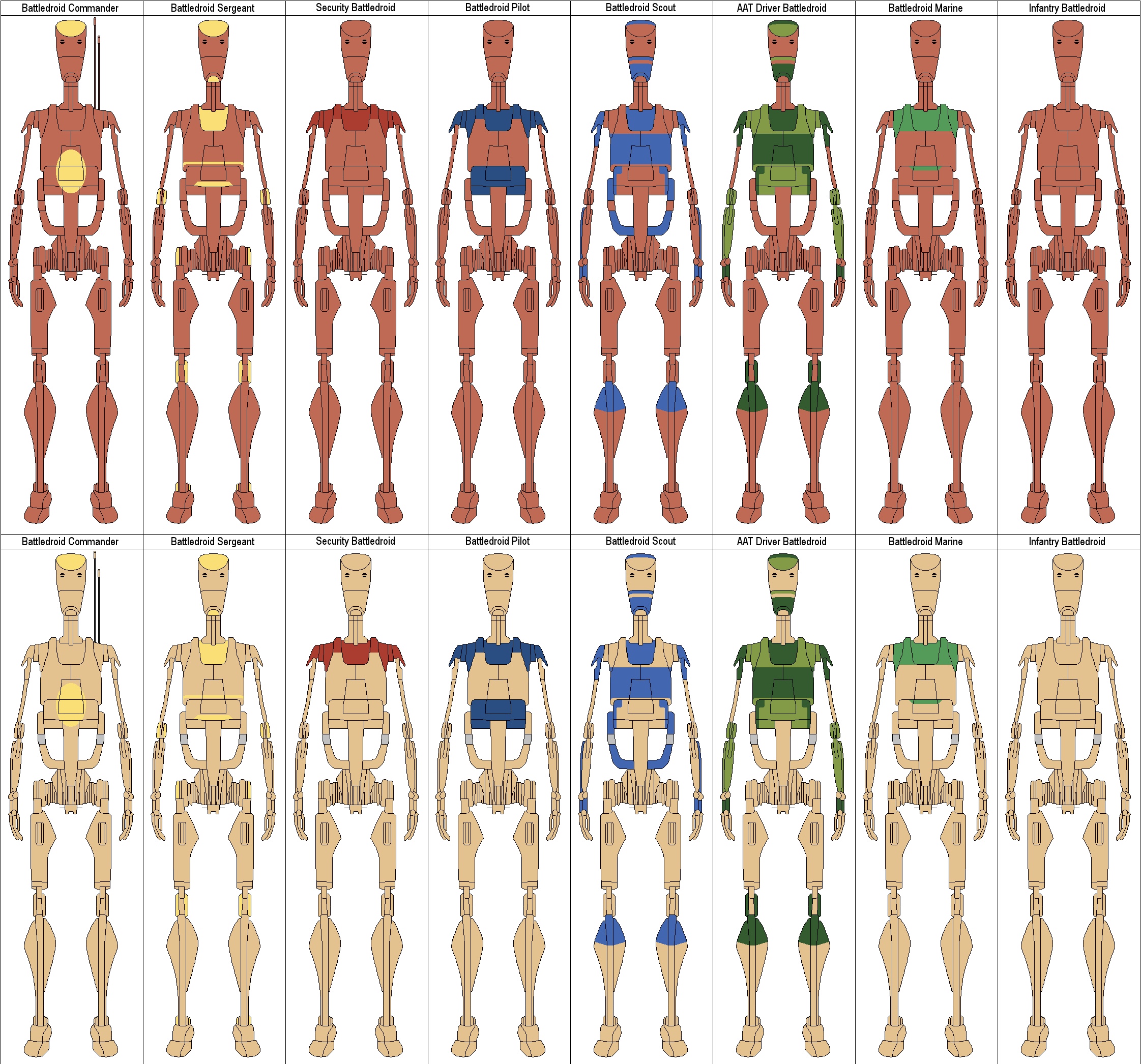
After looking back over some references I decided that each unit would retain its colour but would have its own unique markings. This would add some much needed variety and a bit more interest to the units. I had been grouping my B1’s into rough squads as I worked through them and was beginning to get an idea of each units role.
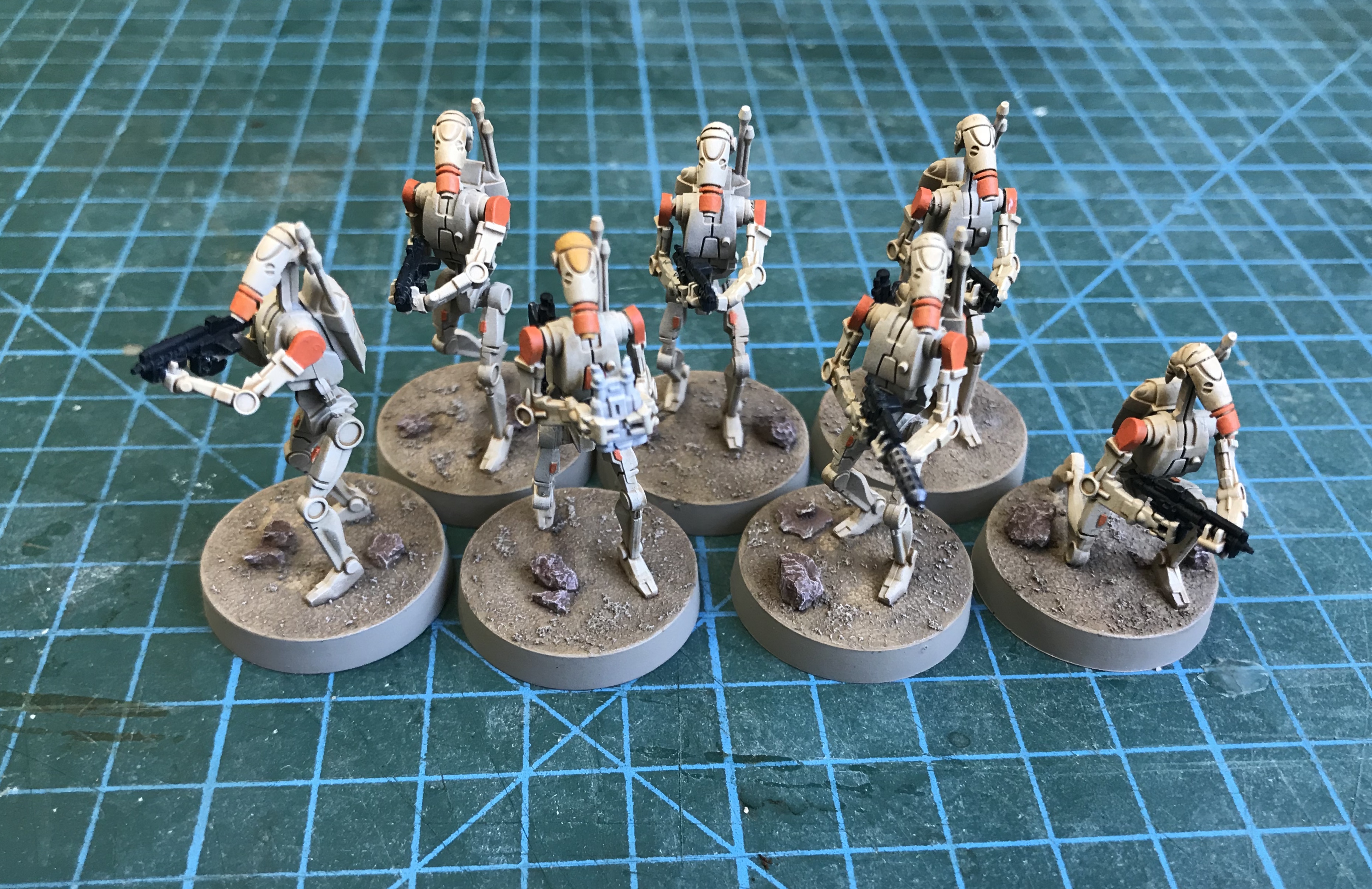
The first squad to be completed is what I consider to be the standard B1 unit build. They have no upgrades besides the E-5C Heavy Trooper. A very cost effective unit at 54 points, sporting seven wounds and putting out an impressive nine dice at a range of three.
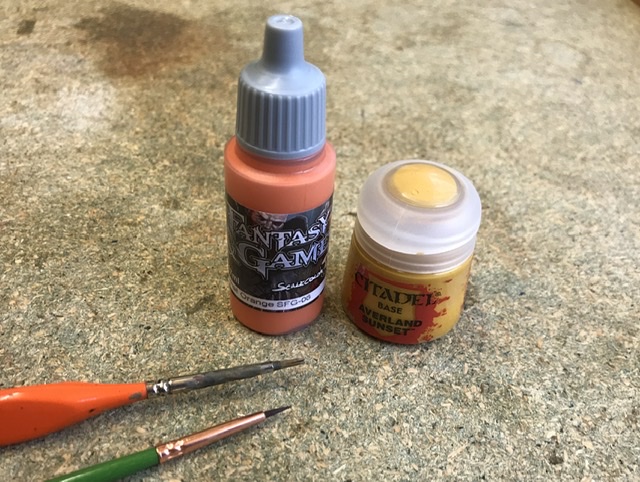
I’ve used Tiamat Orange by Scale 75 for this units markings. I’ve also decided to keep the movie convention of yellow markings on the unit leaders head, making him easily identifiable from his squad mates. For the yellow I have used GW Averland Sunset.
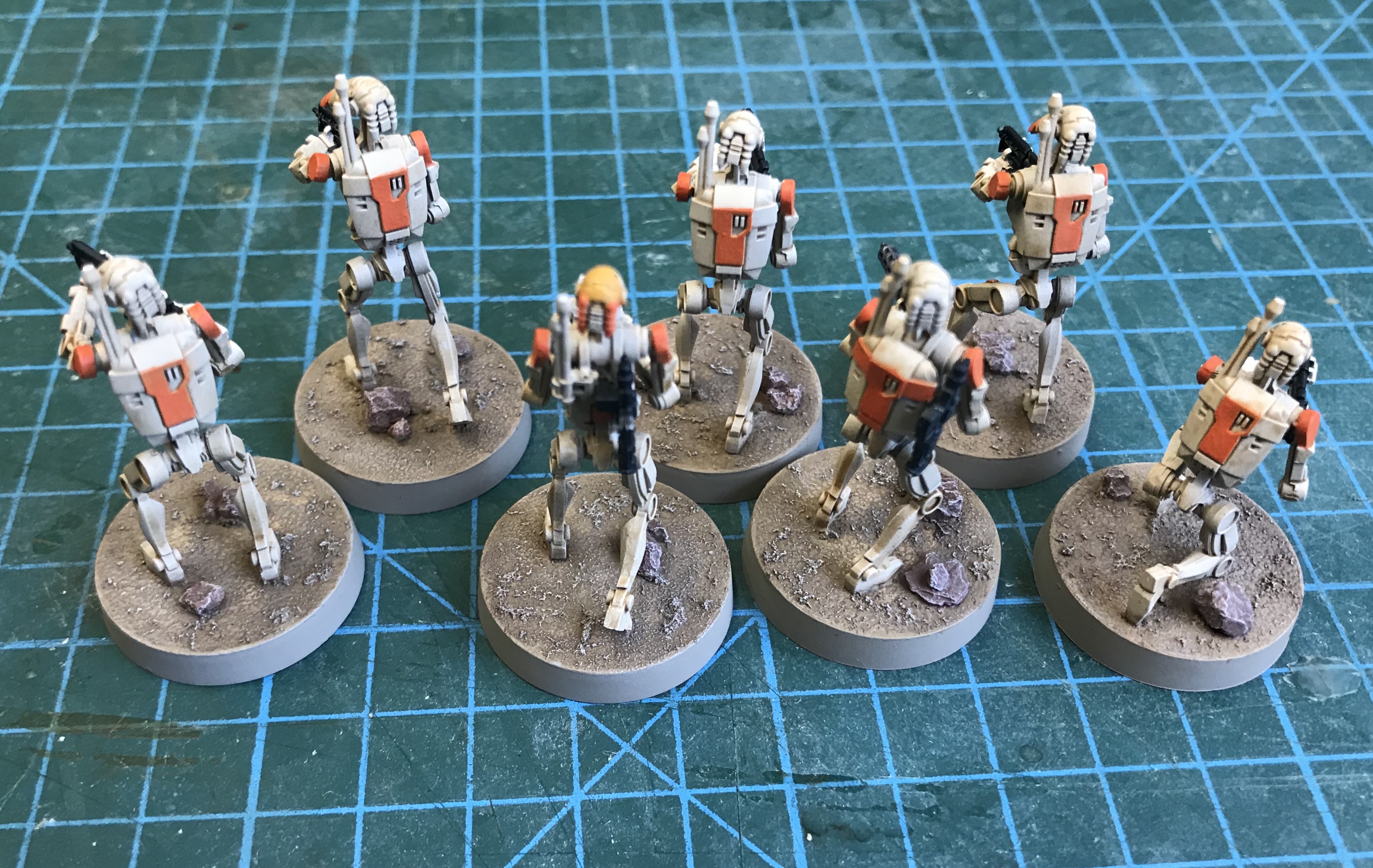
The E-5C is the default heavy weapon for Droids in my opinion. Not only is it the cheapest weapon upgrade available, it’s range of three also synchronises well with the units standard weaponry. This means that if the droids AI programming kicks in, the unit will be firing all of its weapons. The three black dice the E-5C adds to the dice pool is respectable and will generally account for most of the hits the unit lands.
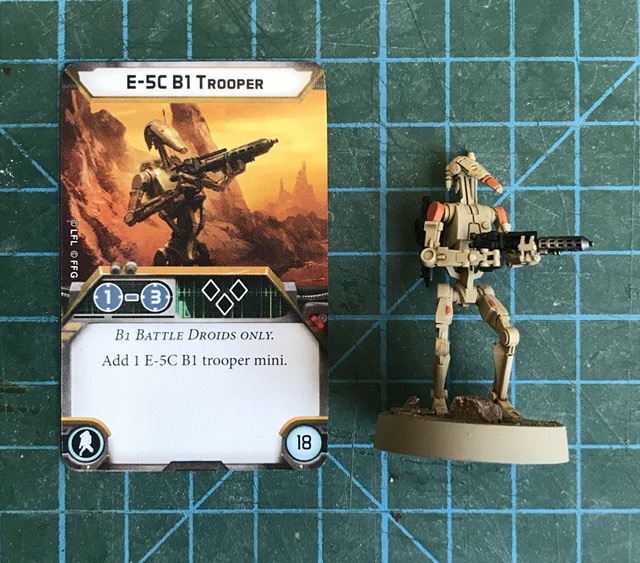
I used a medium sized brush for the most part as the armoured plates of the droids made for easy painting. I also kept a detail brush close to hand for some of the smaller sections.